
Liber Astronomiae Antiquus
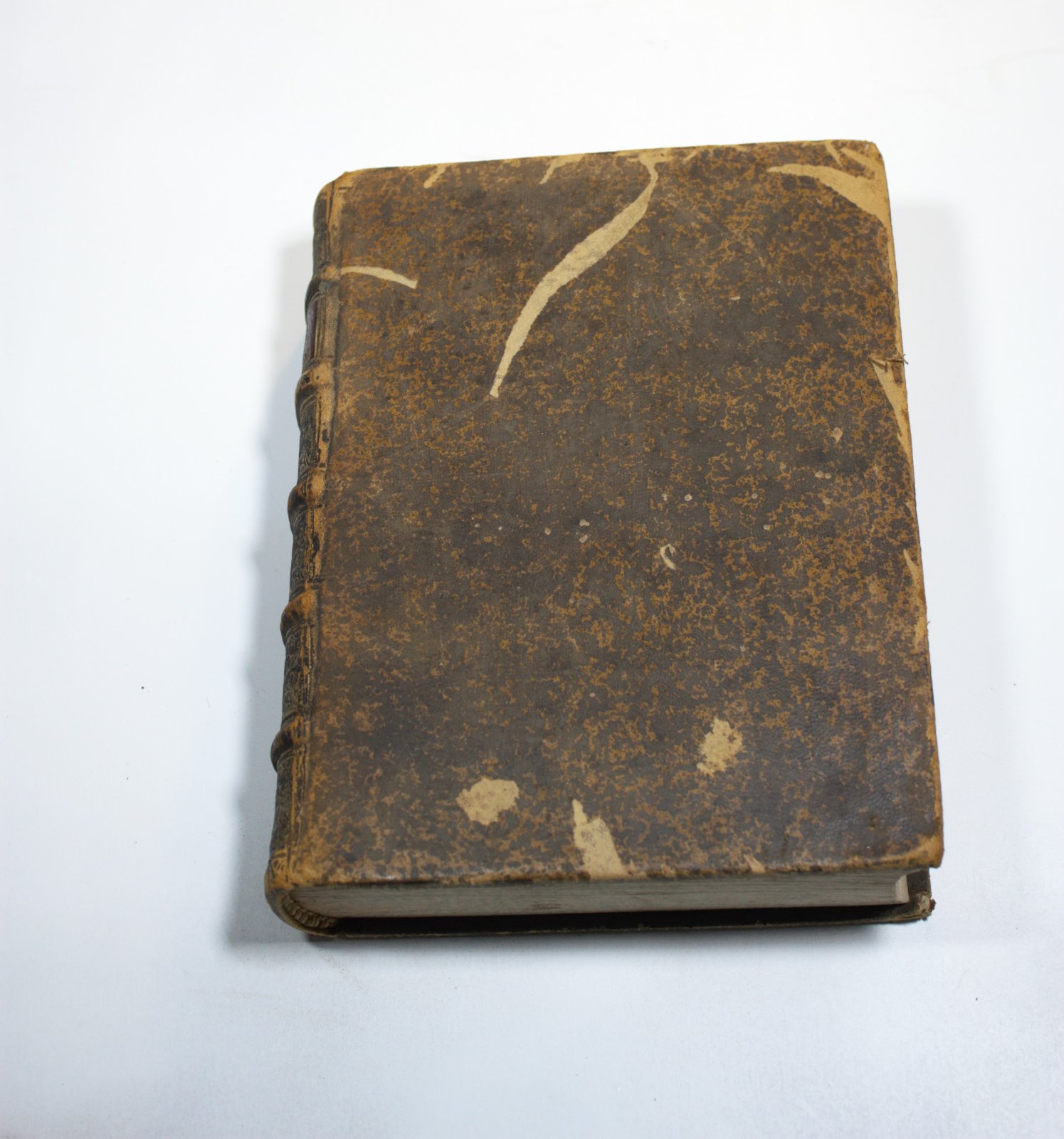
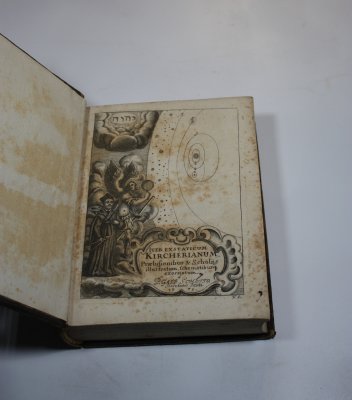
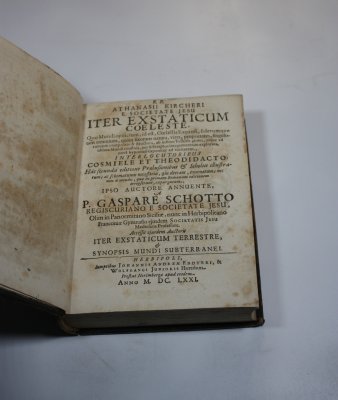
Iter extaticum coeleste, quo mundi opificium, id est, coelestis expansi, siderumq

Iter extaticum coeleste, quo mundi opificium, id est, coelestis expansi, siderumq

AuthorAthanasius Kircher
Year1671
Book languageLatin
Condition Good
4.000 €

Description

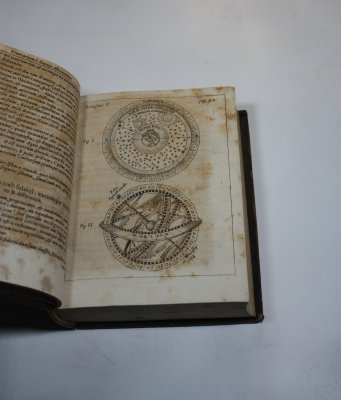
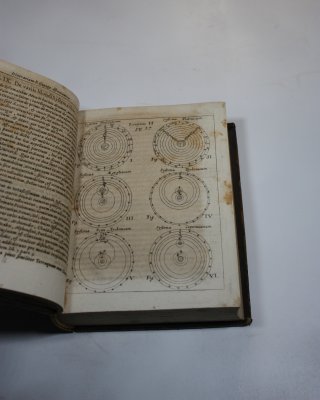
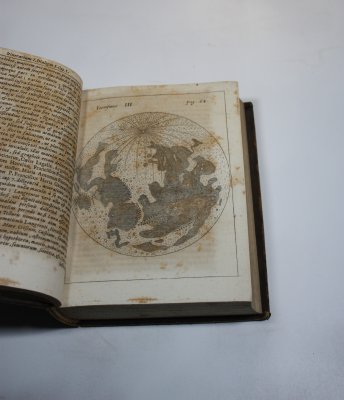
Third edition, enlarged and edited by the author's friend and disciple, Gaspar Schott. The first edition of 1656 contained no illustrations. This is one of Kircher's most curious works, in which a certain Teodidacte, a personification of Kircher himself, dreams of a journey through the heavens guided by the angel Cosmiel. In the first dialogue, Kircher describes a journey to the moon, which he finds full of mountains and craters. He continues towards Venus, and then towards each of the other planets and towards the region of the fixed stars. The sun has spots, he announces. He himself had seen sunspots through his telescope some years earlier. Kircher rejected the Aristotelian and Ptolemaic cosmologies in favour of that of Tycho Brahe, who had argued that the sun orbits the Earth and is in turn orbited by the planets and the fixed stars. This system was adopted "by the majority of Kircher's Jesuit colleagues, as it allowed them to maintain geocentric orthodoxy while defending, at least in part, the new and more scientific heliocentricity advocated by the Copernicans." A book very rarely found in bookshops.