Liber Astronomiae Antiquus
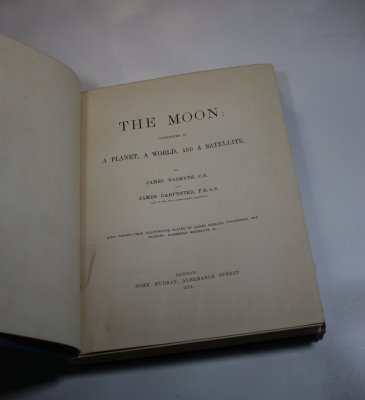
The Moon considered as a planet, a word, and a satellite

The Moon considered as a planet, a word, and a satellite

AuthorJames Nasmyth
Year1874
Book languageEnglish
Condition Good
3.000 €

Description

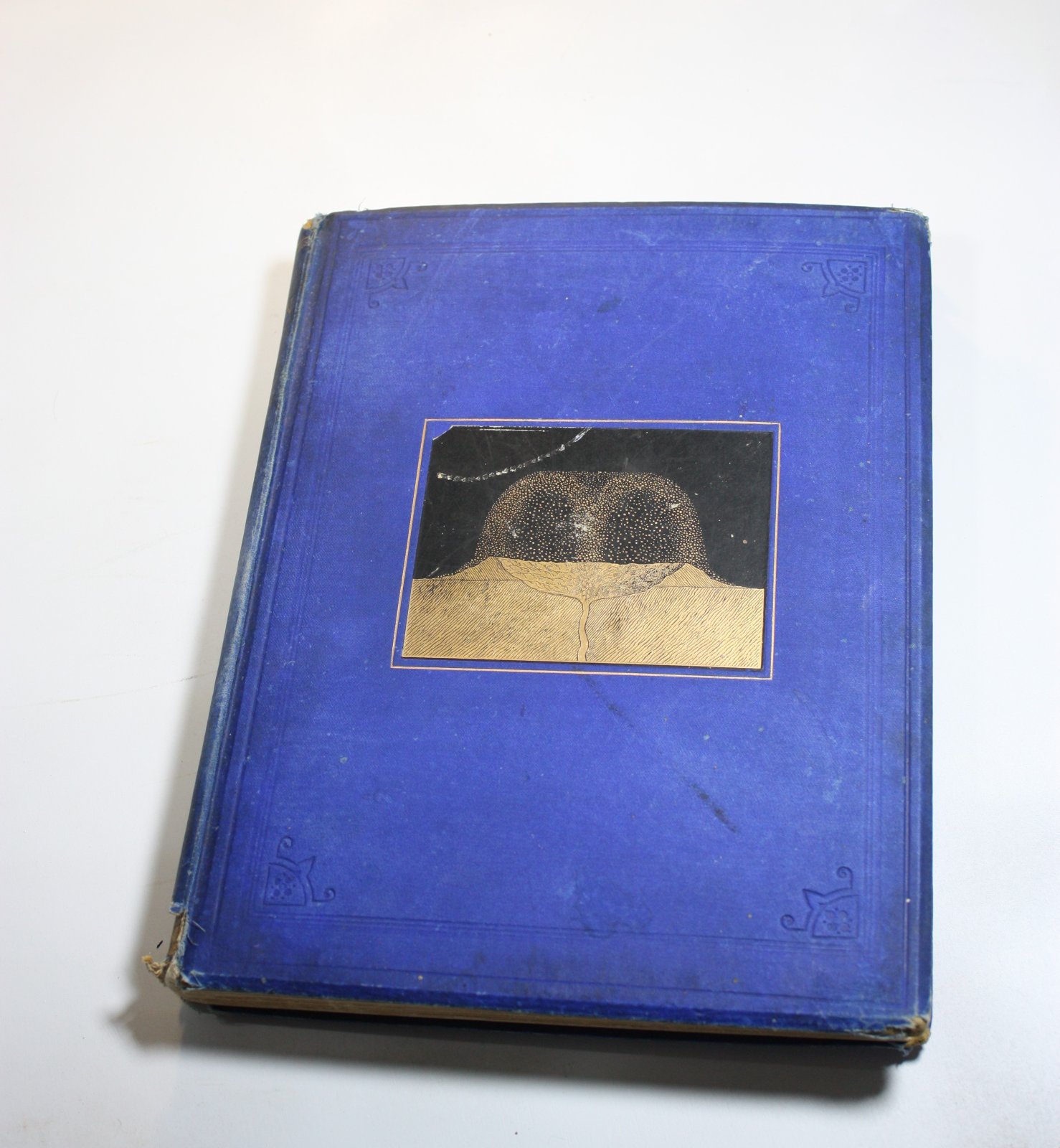
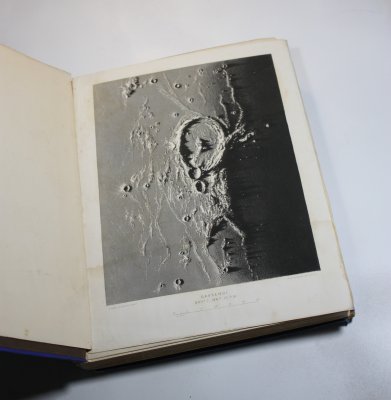
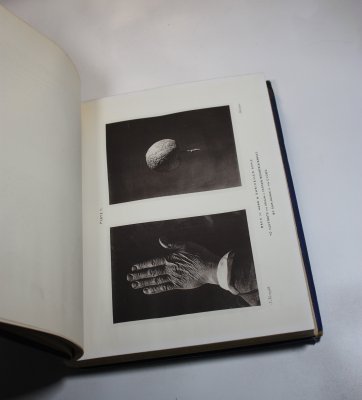
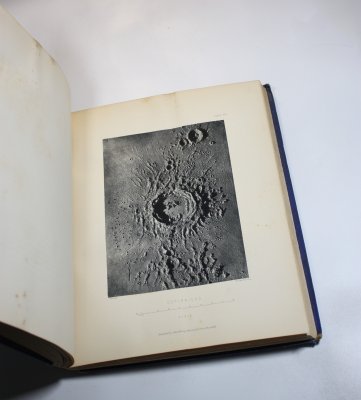
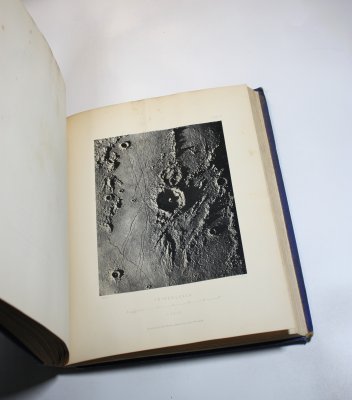
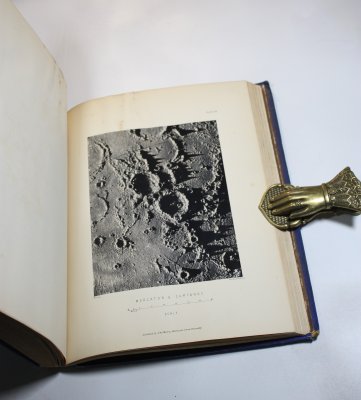
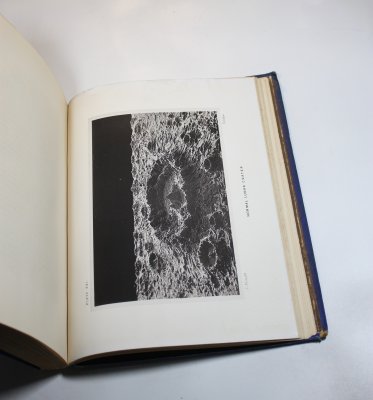
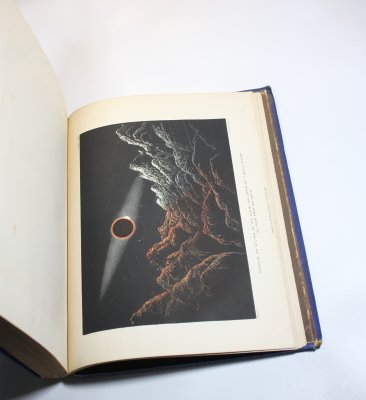
First edition printed in 1874, 23 Woodbury-type plates, 1 chromolithographed plate, heliographed frontispiece with border, numerous text illustrations, original blue publisher's cloth, gilt vignette to upper board, slightly rubbed, spine a little faded, corners rubbed, 4to, London, John Murray, 1874. This scarce work is most notable for its photographs of the surface of the moon. This was achieved by Scottish astronomer James Nasmyth, who sketched the mountainous, crater-filled surface of the moon from observations he made over more than thirty years. He then constructed plaster models based on the drawings and photographed them against black backgrounds with raking light, to "produce the most faithful representations of the original." Nasmyth's technique circumvented the technical limitations of astronomical photography to achieve the detail required. He likely adopted the method from his father, a well-known Scottish landscape painter who used plaster models as studies for his paintings. The book was one of the first to be illustrated with photomechanical prints, which were praised by one of the book's contemporary reviewers as some of the "most truthful and startling representations of natural objects" ever encountered by a student of science. The first three editions include a variety of processes, such as engraving, photogravure, heliotype, lithography, chromolithography, and four different variations of the Woodbury type. It is likely that the first two editions, published simultaneously, were in part experiments as to which method of reproduction was best. The Woodbury type appears to have been favoured, as the third edition is composed entirely of Woodbury types. The Moon also includes numerous examples of the kinds of schematic diagrams more commonly used to illustrate scientific texts. These engravings trace astral trajectories, describe hypothetical cross-sections of the planet's subterranean layers, and reveal the mechanisms by which Nasmyth and Carpenter believed ancient volcanoes must have shaped the lunar surface. The combination of different image types and reproduction technologies in the book allowed it to convey more extensive and varied information, while reinforcing its claims to scientific "truthfulness." The diagrams, schematic drawings and photomechanical illustrations allow the viewer to probe the depths of the moon and scale its heights, to examine it up close and also to trace its path through the cosmos.