6 May 2026
Galileo and the First English Printing of the Dialogue: A 1663 Treasure
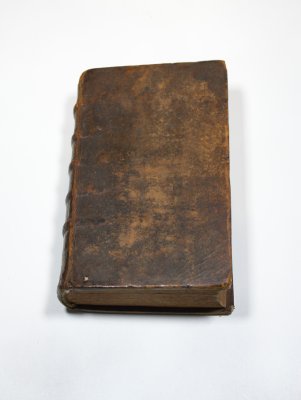
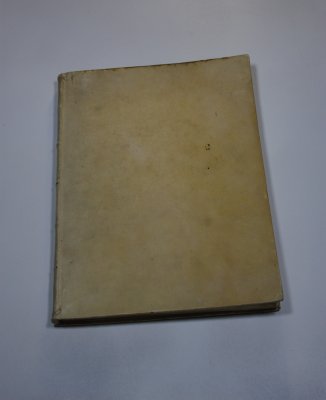
In 1663, Galileo's most controversial work was published in England for the first time. We tell the fascinating story of this exceptional copy in our catalogue.
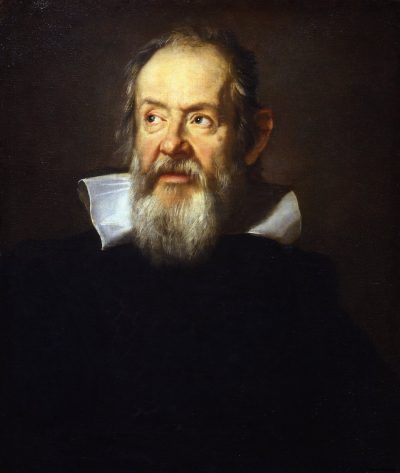
When Galileo Galilei published his Dialogo sopra i due massimi sistemi del mondo in 1632, he unleashed one of the greatest intellectual storms in the history of science. Pope Urban VIII, who had previously counted Galileo as a friend, felt personally betrayed. The Inquisition condemned the work, forced the scientist to recant, and placed him under house arrest until his death in 1642. The book was placed on the Index Librorum Prohibitorum, where it would remain until 1835.
The First English Printing
Thirty-one years after the first Italian edition, the Systema Cosmicum —the Latin title under which the work was published in England— appeared in London in 1663. This is the first English printing and the third Latin edition of the Dialogo. England, already separated from Rome and far more receptive to scientific advances, was the perfect ground to welcome Galileo's heliocentric ideas. The country that would soon produce Newton was now able to read the work that had inspired him.
The edition is in octavo format, 704 pages, with an engraved title page and numerous woodcut illustrations throughout the text. It includes, at the end of the Dialogus, an excerpt from Kepler and the reconciliation of astronomical systems — materials absent from the original Italian edition that greatly enrich the cosmological debate.
Why Is It So Valuable Today?
Seventeenth-century print runs were severely limited — rarely exceeding a few hundred copies — and the centuries have taken their toll on many volumes. To survive three hundred and sixty years in circulation is, in itself, a remarkable feat. Most surviving copies today reside in institutional libraries or private collections assembled during the eighteenth and nineteenth centuries. To find one available today is an exceptional opportunity.
Beyond its physical rarity, the Systema Cosmicum carries the symbolic weight of a forbidden work: the book the Church tried to silence and that, despite everything, forever changed humanity's vision of the cosmos.
The Dialogue: Three Characters, Two Systems, One Universe
The structure of the Dialogo is a debate between three characters: Salviati (voicing Galileo's heliocentric arguments), Sagredo (an intelligent, neutral observer), and Simplicio (defending Aristotelian geocentrism). Over four days of debate, Galileo deploys all his evidence: the phases of Venus, the moons of Jupiter, sunspots, the mountains of the Moon... Each telescopic observation is a piece of the puzzle dismantling the Ptolemaic system.
For a collector of antique astronomy books, owning a copy of the Systema Cosmicum of 1663 means holding in your hands a fragment of the revolution that changed our vision of the universe forever.
Works by this author in our catalogue