8 May 2026
Kepler's Revolutionary 1604 Masterpiece: Where Astronomy Met Ophthalmology
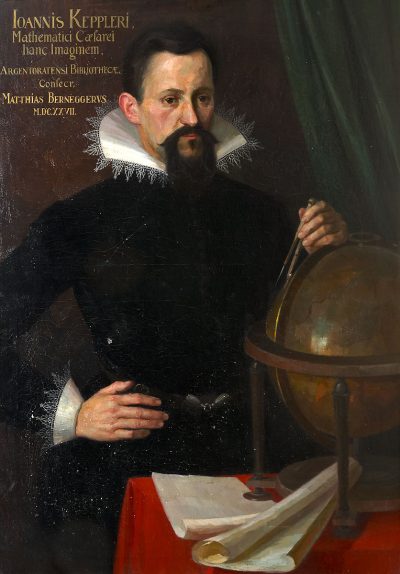
Johannes Kepler's 1604 Ad Vitellionem paralipomena stands as one of the most pivotal works in the history of science, fundamentally transforming our understanding of light, vision, and the cosmos. This rare volume represents a watershed moment when astronomy and medicine converged to illuminate the nature of human sight.
The Convergence of Two Sciences
Few books in the history of science can claim to have revolutionized not one but two entire disciplines. Ad Vitellionem paralipomena, quibus astronomiae pars optica, published by Johannes Kepler in 1604, is precisely such a work. This remarkable volume stands as a monument to Renaissance intellectual ambition, synthesizing advances in astronomy with groundbreaking discoveries in human physiology and optics. For collectors and astronomy enthusiasts, this edition represents an exceptional rarity that bridges the worlds of celestial mechanics and medical science.
A Foundation for Modern Optics
Kepler's genius lay in his ability to see connections where others saw separate domains. The work consists of two carefully constructed parts. The first section, presented as a supplement to the medieval optical theorist Witelo (hence the title's reference), contains the first physiologically correct explanation of human vision. Kepler demonstrated that the retina—not the lens, as previously believed—was essential for sight. He explained how the crystalline lens refracts light and how the convergence of light rays before reaching the retina causes myopia. His description of central and peripheral vision, along with the vitreous humor's role in maintaining retinal tension, established the foundational principles of modern ophthalmology.
Perhaps most importantly, Kepler clearly defined the concept of the light ray, a theoretical abstraction that became the cornerstone of modern geometric optics. He explored the formation of images through pinholes and analyzed the behavior of light reflected in mirrors and refracted through lenses. These investigations produced what remains one of the earliest approximately correct formulas for refraction—the relationship between the sine of incident and refracted rays—a principle that would guide optical science for centuries.
Astronomical Insights and Historical Significance
The second part, the Astronomiae Pars Optica, comprises six chapters addressing some of astronomy's most pressing questions. Kepler tackled parallax, atmospheric refraction, and the calculation of eclipses using methods that remained in use for generations. He investigated the annual variation in the sun's apparent size, recognizing that these changing dimensions held the key to understanding planetary distances—a problem intimately connected to his revolutionary heliocentric theories.
What makes this 1604 edition extraordinarily valuable is its role as a transitional work. It contains the first suggestion of wave theory of light, predating later optical theories by decades. It announces fundamental principles of photometry that would become cornerstones of physics. Yet it also represents Kepler's own limitations: his observational results on solar distance, while methodologically sound, proved inconclusive—a reminder that even genius operates within the constraints of available instrumentation.
A Collector's Treasure
This edition is notably scarce, particularly in excellent condition. Most surviving copies show significant wear or have lost important plates, such as the anatomical diagram of the eye's humors. A complete, well-preserved example represents a significant acquisition for serious collectors. Its absence from many major libraries attests to both its historical fragility and its rarity. For anyone passionate about the origins of modern science, the intersection of disciplines, or the visual documentation of Renaissance learning, Kepler's 1604 masterpiece remains an unparalleled treasure.
Works by this author in our catalogue