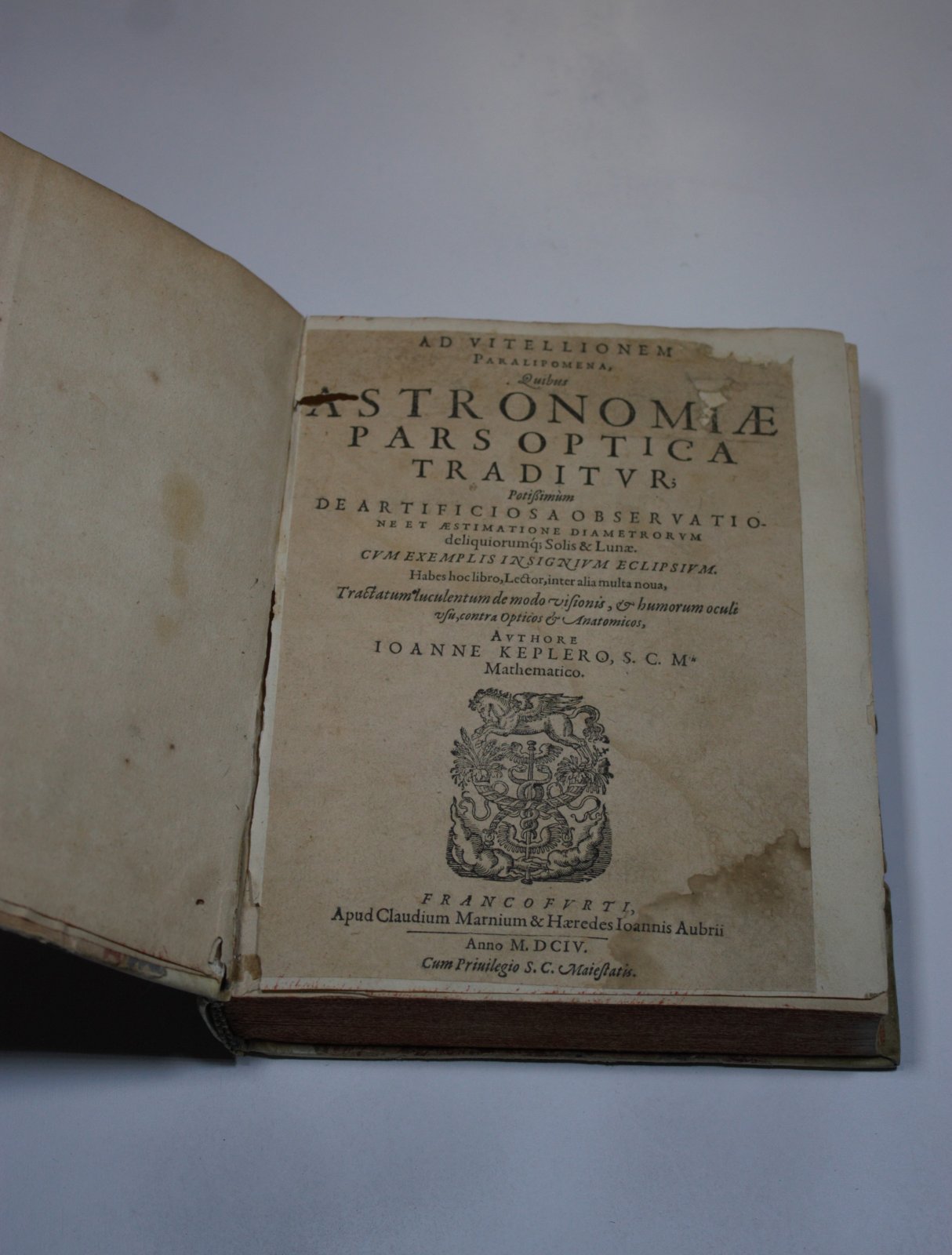
Ad Vitellionem paralipomena, quibus astonomiae pars optica
| Author | Rene Descartes |
| Year | 1604 |
| Edición | 1604 |
| Book language | Latin |
| Condition |
Good
|
14.000 €
Description
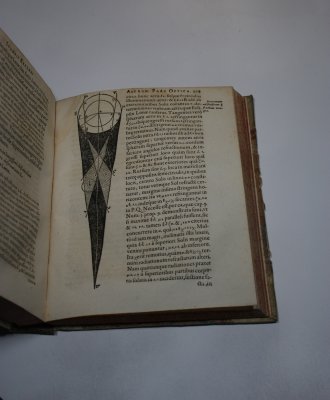
Kepler's book on optics and a very significant work in the history of ophthalmology in which he defined optics and the function of the eye. Kepler clearly defined the concept of a ray of light, which was the basis of modern geometrical optics, as well as the formation of images from pinholes and the nature of images from mirrors and lenses. The work consists of two parts: the first part, which Kepler intended as an appendix to Witelo (hence "Ad Vitellionem paralipomena"), is "a treatise on vision and the human eye in which it is shown for the first time how the retina is essential for sight, the role played by the crystalline lens in refraction, and that the convergence of light rays before reaching the retina is the cause of myopia" (Garrison p. 260). Kepler describes the nature of central and peripheral vision and demonstrates the role played by the vitreous in keeping the retina taut. The second part, the "Astronomiae Pars Optica", comprises six chapters that "include not only a discussion of parallax, astronomical refraction and its instruments for eclipses, but also the annual variation in the apparent size of the sun. Since the changing size of the solar image is inversely proportional to the distance of the sun, this key problem was closely related to his planetary theory; unfortunately, his observational results were not decisive" (DSB). This book contains "the first correct physiological explanation of defects of vision, with a theory of vision, the first suggestion of the wave theory of light, an approximately correct formula for refraction (noting the relationship between the sines of the incident and refracted rays), the first announcement of one of the principal axioms of photometry, his method for calculating eclipses, still in use, etc." The plate of "Humorum oculi" is missing. Otherwise an excellent copy.