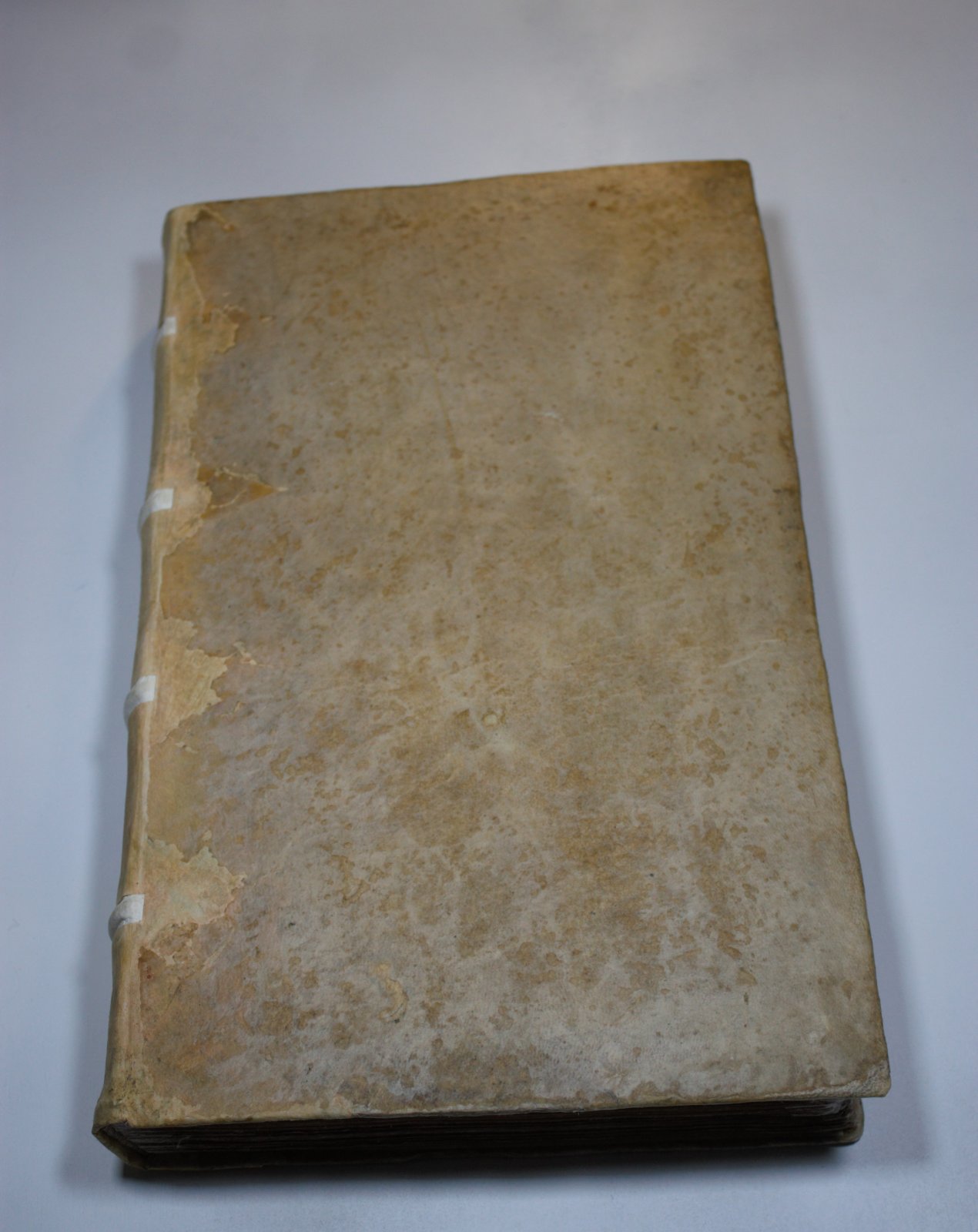
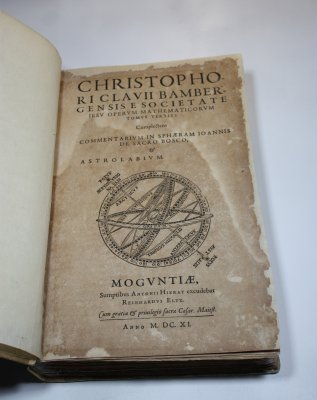
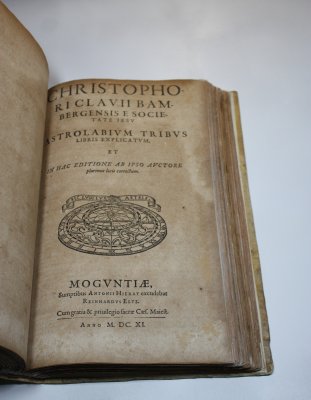
Operum mathematicum tomus tertius complectens commentarium Ioannis de Sacrobosco
| Author | Christopher Clavius |
| Year | 1611 |
| Book language | Latin |
| Condition |
Good
|
4.500 €
Description
Posthumous edition of Clavius, in which he describes the astronomical discoveries made by Galileo. The two scientists met when Galileo visited Rome in 1587 and from then on maintained occasional correspondence on mathematical matters. When Clavius published a book, he always sent a copy to his friend Galileo. When Galileo published Sidereus Nuncius in 1610, Clavius was an old man and it must have been extremely difficult to comprehend these new discoveries both from a scientific and a religious point of view. As the leading scientist of the Roman College, he was asked to pass judgement on Galileo. Yet for some time he did not have a telescope of sufficient quality to make his own observations. Nevertheless, in the final edition of In sphaeram Ioannis de Sacre Bosco Commentarius, he addressed the issues:
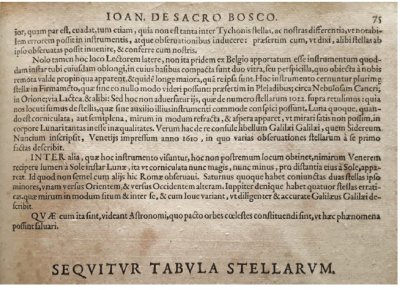
"I do not wish to hide from the reader that not long ago a certain instrument was brought from Belgium. It has the form of a long tube at the bases of which two glasses, or rather lenses, are placed, through which distant objects appear much closer to us... than the things themselves. This instrument shows many more stars in the firmament than can be seen without it, especially in the Pleiades, around the nebulae of Cancer and Orion, in the Milky Way and other places... and when the Moon is in its first quarter or half full, it appears so remarkably fractured and rough that I cannot marvel enough that there should be such irregularity in the lunar body. Consult the reliable booklet of Galileo Galilei, printed in Venice in 1610 and called Sidereus Nuncius, which describes various observations of the stars made by him for the first time.
Far from the least important of the things seen with this instrument is that Venus receives its light from the Sun just as the Moon does, so that it sometimes resembles a half moon more, sometimes less, according to its distance from the Sun. In Rome I have observed this, in the presence of others, more than once. Saturn has joined to it two smaller stars, one to the east and the other to the west. Finally, Jupiter has four wandering stars, which vary their positions notably both among themselves and with respect to Jupiter, as Galileo Galilei describes carefully and precisely.
Things being so, astronomers ought to consider how the celestial orbs may be arranged in order to save these phenomena."