19 June 2026
A Journey to the Moon: The 1872 Combined Edition of Jules Verne's Masterpiece

Discover why the 1872 French edition combining De la Terre à la Lune and Autour de la Lune remains one of the most sought-after volumes in rare book collecting, featuring extraordinary illustrations by Montaut, Bayard, and Neuville.
Jules Verne's Visionary Leap into Space
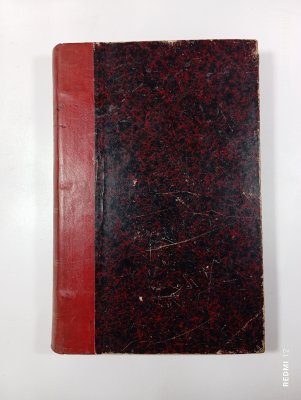
In 1872, Jules Verne's combined edition of De la Terre à la Lune (From the Earth to the Moon) and Autour de la Lune (Around the Moon) represented far more than mere entertainment—it was a prophetic exploration of space travel that would captivate readers for generations. This remarkable first combined printing, published by J. Hetzel et Cie in Paris, stands as a cornerstone of science fiction literature and remains an essential acquisition for both serious collectors and astronomy enthusiasts alike.
The Visionary Author Behind the Vision
Jules Verne, often regarded as the father of science fiction, possessed an extraordinary ability to blend scientific accuracy with imaginative storytelling. Writing in the mid-19th century, decades before actual space exploration became reality, Verne meticulously researched ballistics, physics, and engineering principles to construct narratives that felt plausible to contemporary readers. His work transcended simple adventure tales; they were exercises in scientific speculation that would prove remarkably prescient when humanity finally reached the moon in 1969.
An Illustrated Treasure Like No Other
What distinguishes this particular 1872 edition from others is its exceptional illustration program. The volume features an impressive 41 original engravings and one map created by the acclaimed Édouard de Montaut, whose technical drawings brought Verne's imaginative spacecraft and lunar landscapes to vivid life. Additionally, the edition includes 44 supplementary illustrations by the renowned artists Émile Bayard and Neuville, with engravings by Hildibrand that showcase the elaborate printing techniques of the era.
These illustrations were not mere decorative elements; they served as visual interpretations of Verne's technical descriptions, helping 19th-century readers visualize concepts that had never existed. For modern collectors, they represent exceptional examples of period engraving craftsmanship and provide fascinating insights into how contemporary artists imagined space travel.
Why This Edition Matters to Collectors
The 1872 combined edition is particularly valuable because it represents a crucial moment in publishing history. Published under the Bibliothèque d'Éducation et de Récréation (Library of Education and Recreation) series by Hetzel—Verne's primary publisher—this edition catered to educated families seeking both intellectual stimulation and entertainment. The quality of paper, binding, and illustrations reflects the premium nature of Hetzel's publications.
Finding an original copy in fine condition has become increasingly difficult. The book's age, heavy use by eager readers across multiple generations, and the fragility of period engravings mean that well-preserved copies command significant prices in the rare book market. Condition is paramount—collectors prize examples with intact bindings, clear illustrations, and minimal foxing.
A Window Into Victorian Innovation
Beyond its literary and scientific merit, this edition provides collectors with a tangible connection to the Victorian era's boundless optimism regarding technological progress. In an age before electricity was commonplace, Verne and his illustrators envisioned moon rockets, space capsules, and orbital mechanics with startling accuracy.
For those passionate about both rare books and the history of astronomy, this 1872 edition of Verne's lunar adventures represents an irreplaceable piece of cultural heritage—a beautiful marriage of art, science, and imagination that continues to inspire wonder.
Works by this author in our catalogue