29 July 2026
Johann Heinrich von Mädler's Populäre Astronomie: A Pioneering Work in Astronomical Literacy

Discover the 1841 edition of Populäre Astronomie by Johann Heinrich von Mädler, a groundbreaking work that democratized astronomy for the general public. This rare German classic features 51 figures across beautifully lithographed folding plates, representing a pivotal moment in the history of scientific education.
A Revolutionary Approach to Astronomical Education
Johann Heinrich von Mädler's Populäre Astronomie, published in 1841, stands as a remarkable testament to the nineteenth-century movement toward making complex scientific knowledge accessible to the educated public. The work represents far more than a simple instructional manual; it embodies a philosophical shift in how the scientific community viewed its responsibility to educate beyond academic circles.
Mädler himself was no ordinary astronomer. Born in 1794 and living until 1874, he achieved distinction as Professor of Astronomy and Director of the prestigious Dorpat Observatory (in present-day Tartu, Estonia). His credentials were impeccable, yet he dedicated significant energy to what he recognized as an equally vital mission: democratizing astronomy for the general educated classes. This commitment to popular science education marked Mädler as a true pioneer in scientific outreach.
The Book's Exceptional Features and Craftsmanship
The 1841 edition of Populäre Astronomie is distinguished by its impressive visual apparatus. The volume includes 51 carefully rendered figures distributed across five folding lithographed plates, complemented by an additional folding table. These are not mere decorative elements; the lithographs represent sophisticated astronomical diagrams and illustrations that would have been expensive and time-consuming to produce. Each image was designed to illuminate complex celestial phenomena in ways that prose alone could not achieve.
Accompanying this primary work is a complementary Atlas der Populären Astronomie (Atlas of Popular Astronomy), containing eleven additional lithographed plates, one of which is folded. This atlas-format supplement provided readers with comprehensive visual references that could be studied alongside the main text, creating an integrated learning experience rare for its time.
Why This Edition Merits Serious Collector Attention
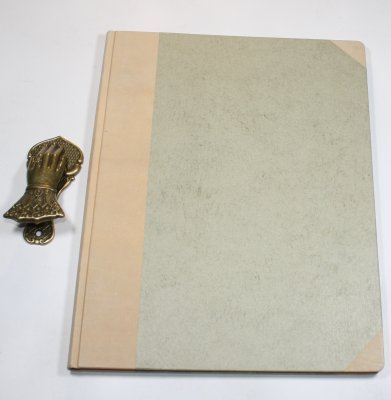
The original contemporary binding in both works, executed in period-appropriate materials and styles, enhances their significance for collectors. The wear visible on corner reinforcements and binding edges—slightly scuffed corners and one creased corner—tells the story of a book that was genuinely read and valued during its era. This is not a pristine museum piece, but rather evidence of a work that fulfilled its educational mission.
Scarcity factors make this 1841 edition particularly noteworthy. The combination of multiple folding plates, the contemporary binding, and the accompanying atlas makes complete sets increasingly difficult to locate. Many copies have been separated over the centuries, their component parts dispersed into different collections.
Significance for Modern Collectors
For collectors of rare astronomy books, this work occupies a unique position. It bridges the gap between serious scientific treatises and popular education, representing the moment when astronomy began its transformation into a subject of widespread intellectual curiosity. Mädler's reputation as a scientific authority gave his popular writings credibility that similar works by lesser-known authors could not command.
This 1841 edition captures a pivotal moment in the history of science communication, making it an invaluable addition to any serious collection of astronomical literature or scientific education history.
Works by this author in our catalogue