2 August 2026
Capturing the Heavens: Warren de la Rue's Groundbreaking 1860 Solar Eclipse Photography
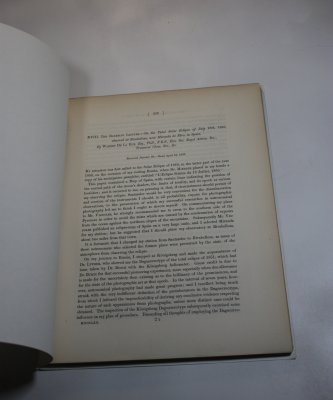
Discover the historic first photographic documentation of a total solar eclipse and its revolutionary impact on astronomy. This rare 1862 publication marks a pivotal moment when photography transformed our understanding of the sun.
A Revolution in Celestial Observation
When Warren de la Rue published his groundbreaking study of the total solar eclipse of July 18, 1860, he didn't just document an astronomical event—he fundamentally transformed how scientists could observe the heavens. This rare 1862 extraction from the Philosophical Transactions (Volume 152, Part II) represents one of the most significant turning points in the history of astronomy, marking the very first successful photographic documentation of a total solar eclipse.
De la Rue's achievement was extraordinary for its time. Using a revolutionary apparatus called the Kew Photoheliograph—a combined camera and telescope specifically designed for solar observation—he captured images of the sun obscured by the moon during totality. This wasn't merely a technical feat; it was a scientific breakthrough that would reshape astronomical research for generations to come.
The Instrument That Changed Everything
The Kew Photoheliograph was no ordinary telescope. Designed by de la Rue himself and constructed by the renowned instrument maker Andrew Ross in 1857, this specialized apparatus represented years of innovation. De la Rue had already adapted the wet-plate collodion process to lunar photography with impressive success, but photographing the sun—the most brilliant and dangerous object in the sky—presented entirely new challenges.
During the 1860 eclipse, de la Rue and his team seized their opportunity. Using wet-plate photography, they captured detailed images of solar prominences—those ethereal features of the sun's atmosphere that are only visible during total eclipse. These photographs provided the first definitive visual confirmation that prominences were genuine solar phenomena, not optical illusions or artifacts of telescopic observation.
A Collector's Treasure
This particular edition is exceptionally rare and valuable for several reasons. The 13 accompanying plates, reproduced as hand-tinted photographic facsimiles, are likely among the earliest of their kind—retouched copies of de la Rue's original photographs. Six of these plates showcase the solar prominences in remarkable detail, their edges somewhat affected by age but their scientific content still perfectly legible. The inclusion of a color scale alongside text illustrations demonstrates the thoughtful presentation of technical information characteristic of Victorian scientific publishing.
The volume's unbound state—extracted directly from the original Philosophical Transactions as it appeared in 1862—adds to its authenticity and historical appeal for serious collectors. The clean text contrasts beautifully with the somewhat aged but serviceable plates, telling the story of how this document has survived and been valued over 160 years.
Warren de la Rue: Pioneer Extraordinaire
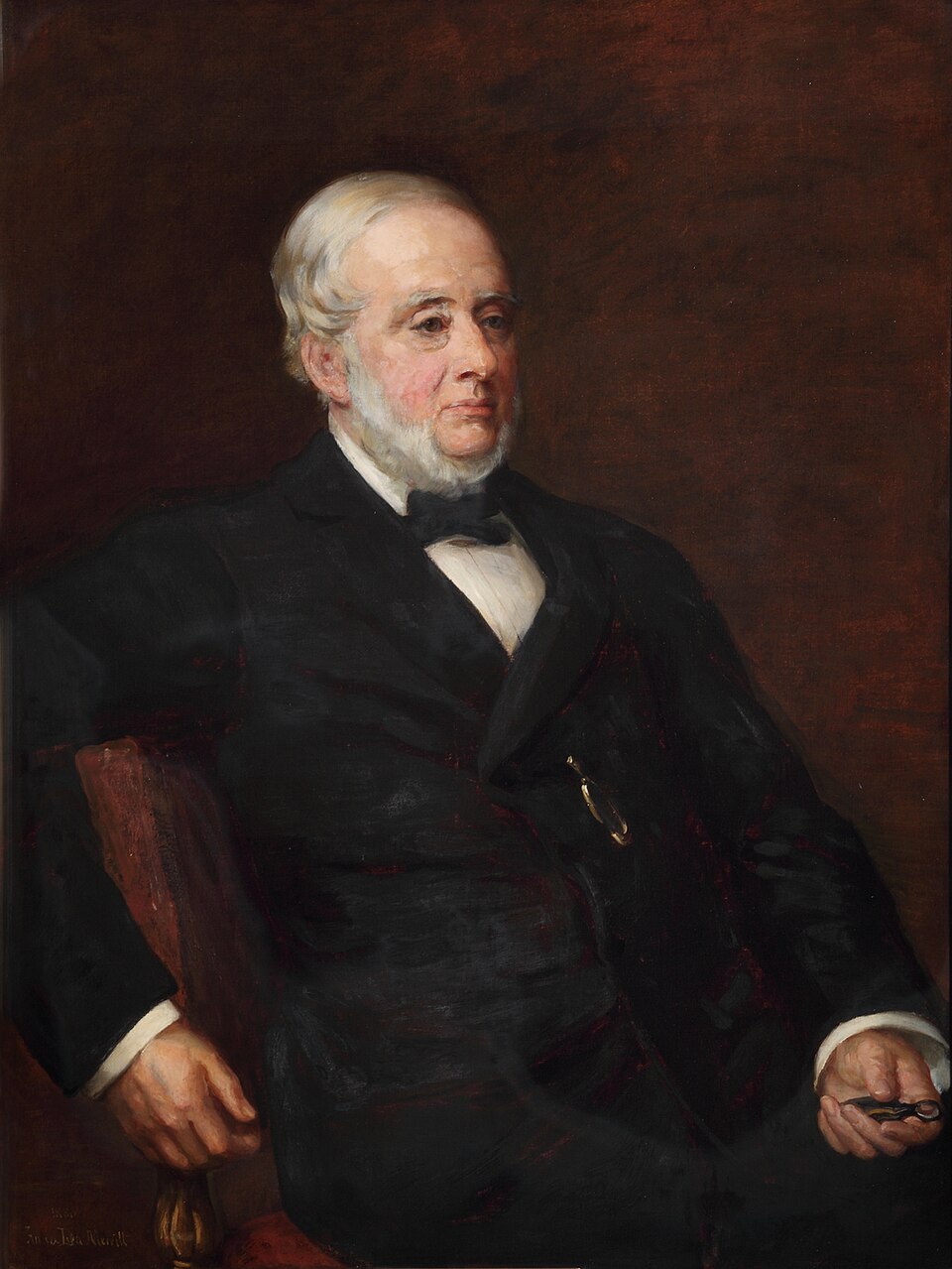
Warren de la Rue (1815-1889) was a British scientist and inventor whose contributions to astronomical photography cannot be overstated. His innovation in adapting the wet-plate process to celestial observation made him a legend among his peers. The Kew Photoheliograph he invented became the standard for solar observation and influenced instrument design for decades.
For collectors and astronomy enthusiasts, this 1862 publication represents far more than a historical document—it's a gateway to understanding how photography revolutionized science. It's a tangible connection to the moment when human ingenuity first successfully captured the sun's hidden features, opening doors to solar physics that remained closed until that fateful eclipse.
Works by this author in our catalogue