22 May 2026
A Masterpiece of 18th-Century Scientific Education: James Ferguson's 1772 Astronomy Guide

Discover why collectors prize this 1772 edition of James Ferguson's accessible astronomy treatise. With original folding plates and comprehensive coverage of celestial phenomena, this volume represents a pivotal moment in making science available to the general public.
An Accessible Gateway to the Cosmos
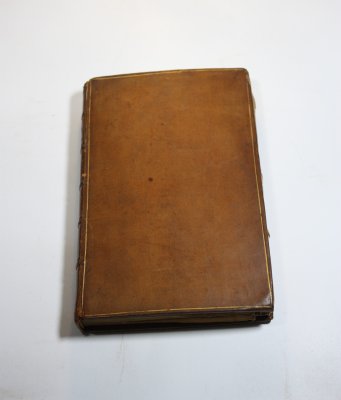
James Ferguson's An easy Introduction to astronomy, for young gentlemen and ladies, published in 1772, stands as a remarkable testament to the Enlightenment's ambition to democratize scientific knowledge. In an era when astronomy remained largely the domain of university scholars and wealthy patrons, Ferguson achieved something revolutionary: he made the heavens comprehensible to educated lay readers, particularly young people seeking to understand the natural world.
The Author's Legacy
James Ferguson (1710-1776) was no ordinary science writer. A self-taught Scottish astronomer and instrument maker, Ferguson epitomized the Enlightenment ideal of the universal scholar. Despite humble beginnings and initial training as a shepherd, his mathematical genius and observational skills propelled him to prominence in London's scientific circles. He became a Fellow of the Royal Society and published numerous influential works on astronomy and mechanics. Ferguson's particular gift was translating complex mathematical concepts into clear, engaging prose—a skill that made him invaluable to readers hungry for scientific understanding.
Comprehensive Coverage of Celestial Mechanics
This 1772 edition provides remarkable breadth. Ferguson guides readers through the fundamental shape and movements of the Earth, explaining the seasons with intuitive clarity. He explores gravity and light, then ventures into the solar system itself. Particularly noteworthy is his treatment of the transit of Venus, an astronomical event that captivated the 18th-century scientific community because it offered a method to calculate the astronomical unit—the distance from Earth to Sun. Ferguson explains both the phenomenon and its crucial applications to astronomy with admirable precision.
The book continues with lunar mechanics, examining the Moon's movements and phases, before addressing solar and lunar eclipses. Ferguson even explains the tides, attributing them to the Moon's gravitational influence—a radical assertion for the period that demonstrated his grasp of Newton's revolutionary physics.
The Seven Original Folding Plates
What makes this particular copy exceptionally valuable are its seven original folding plates. These hand-colored or engraved diagrams were essential for understanding Ferguson's explanations, transforming abstract concepts into visual representations. Readers could unfold detailed illustrations showing planetary orbits, lunar phases, eclipse geometry, and Earth's relationship to the Sun. These plates represent hours of careful engraving work and represent a significant production expense for the publisher.
While this copy shows slight wear at the margins—carefully repaired with archival paper tape—this represents honest aging rather than deterioration. Such minor conservation work, when executed properly, preserves the book's usability and integrity without compromising authenticity.
Why This Edition Matters to Collectors
First editions and early printings of Ferguson's astronomy works are increasingly scarce. This 1772 edition predates many of the later, more frequently reprinted versions that flooded the market in the 19th century. The presence of all seven original folding plates in good condition significantly enhances its value. For collectors of scientific history, Enlightenment literature, or astronomy heritage, this volume represents a pivotal work—proof that scientific knowledge could be both rigorous and accessible, a lesson our own age continues to value.
Works by this author in our catalogue