29 June 2026
Laplace's Revolutionary 1799 Edition: A Landmark in Scientific Communication
Discover why the 1799 second edition of Exposition du système du monde remains a treasured prize for collectors. This rare volume captures Laplace's genius in making cutting-edge astronomy accessible without sacrificing scientific rigor.
A Masterpiece of Enlightenment Science
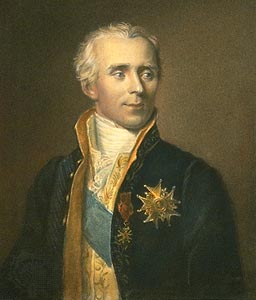
Pierre-Simon Laplace's Exposition du système du monde stands as one of the most significant scientific works of the 18th century, and the 1799 second edition represents a pivotal moment in the history of astronomical literature. Originally composed from lectures delivered at the newly established École Normale in 1795, this work exemplifies Laplace's commitment to advancing human knowledge while making it accessible to educated readers.
What makes this particular 1799 Crapelet edition especially remarkable is its unique dating convention. While other 1799 printings adhered to the Revolutionary calendar notation of "Année VII," this volume uniquely displays the traditional Gregorian year. This curious bibliographic detail has made it a sought-after variant among discerning collectors who appreciate such historical nuances.
Bridging Mathematics and Public Understanding
Laplace faced an unusual challenge when writing this treatise: how to explain complex gravitational mechanics and celestial phenomena without resorting to advanced mathematical formalism. His elegant solution was to develop an essentially mathematical book that abandoned the heavy algebraic apparatus readers might expect. Instead, he employed clear exposition and logical progression to lead readers through the revolutionary discoveries that had transformed astronomy during the previous century.
The 351-page volume, including its semi-title page, represents a carefully curated synthesis of eighteenth-century astronomical and mechanical progress. Laplace's own groundbreaking contributions to universal gravitation theory are woven throughout, presenting readers with nothing less than a comprehensive overview of humanity's understanding of the cosmos.
Why This Edition Matters to Collectors
For rare book collectors and astronomy enthusiasts, the 1799 second edition holds particular value. It represents a "revised and enlarged" version directly overseen by Laplace himself, ensuring its authenticity and completeness. This was the author's preferred text before his later, more technical presentations of celestial mechanics.
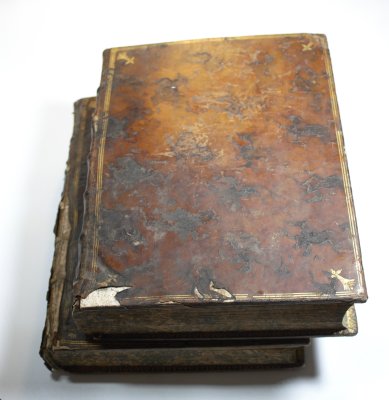
The Paris imprint of Crapelet and J.M. Duprat was known for producing fine editions, and the craftsmanship evident in surviving copies demonstrates why this book was cherished by contemporaries. The physical condition of these volumes, having survived over two centuries, speaks to their quality and the care with which they were bound.
The Spirit of the Enlightenment Preserved
This work embodies the true spirit of the Enlightenment's scientific mission: the democratization of knowledge without compromising intellectual rigor. Laplace refused to patronize his audience, yet he refused to obscure his meaning behind unnecessary mathematical complexity. The result is a genuine scientific work of profound importance that remains readable and engaging today.
Whether you're assembling a collection of foundational astronomy texts or seeking a window into late 18th-century scientific thought, the 1799 Crapelet edition of Exposition du système du monde offers both intellectual treasures and historical significance. It captures a moment when the systematic study of the heavens had reached a new pinnacle of achievement, and one great mind undertook to share that achievement with the world.
Works by this author in our catalogue