4 July 2026
Galileo's Sunspot Controversy: A Landmark in Scientific Dispute
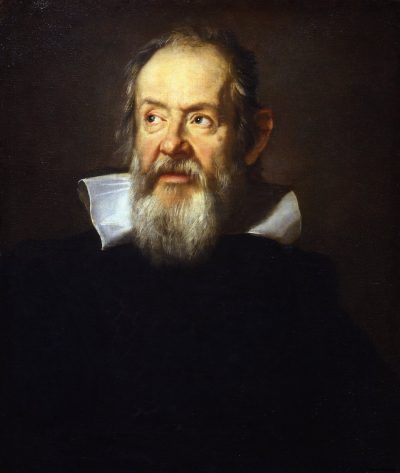
Discover how Galileo's 1655 'Istoria e demostrationi intorno all macchie solari' reignited astronomical debate with the brilliant Jesuit mathematician Christoph Scheiner, marking a pivotal moment in the history of observational astronomy.
The Sunspot Debate That Changed Science
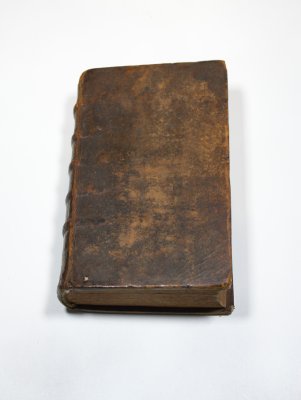
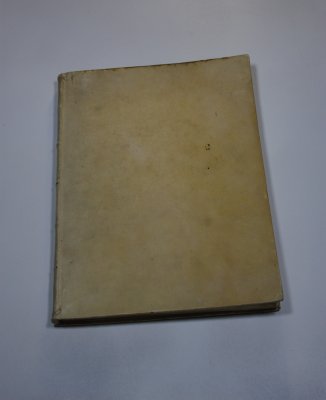
Galileo Galilei's Istoria e demostrationi intorno all macchie solari (History and Demonstrations Concerning Sunspots) stands as one of the most intellectually charged astronomical works of the seventeenth century. Published in 1655, this volume represents far more than a simple observational treatise—it encapsulates a fundamental conflict between two brilliant minds competing not merely for priority, but for the very nature of how we understand the cosmos.
A New Kind of Scientific Adversary
What makes this work particularly significant is that Galileo faced an opponent of unprecedented caliber in Christoph Scheiner, a German Jesuit mathematician and astronomer (1573-1650) of formidable intellectual prowess. Unlike Galileo's earlier quarrels with "severe defenders of every Peripatetic minutia"—those clinging stubbornly to Aristotelian dogma—Scheiner represented something altogether different: a rigorous, mathematically sophisticated mind employing empirical methods equally sophisticated as Galileo's own.
The dispute centered on the nature and origin of sunspots, a phenomenon only recently made visible through telescopic observation. Galileo argued that sunspots were blemishes on the Sun's surface itself, rotating with the solar body. Scheiner, constrained partly by theological considerations and partly by genuine scientific reasoning, proposed instead that sunspots were small planets orbiting near the Sun. This wasn't a clash between superstition and enlightenment—it was a genuine scientific disagreement between two capable astronomers interpreting the same phenomena through different theoretical frameworks.
The Significance of This 1655 Edition
The 1655 edition of Istoria e demostrationi is particularly remarkable because it arrived five years after Scheiner's death and three years after Galileo's own passing in 1642. This posthumous publication carries profound historical weight, representing Galileo's final, definitive statement on the sunspot controversy—a last word in a debate that had consumed considerable intellectual energy throughout his life.
For collectors, this edition remains exceptionally rare. The work combines Galileo's unparalleled observational data, meticulous drawings of sunspot observations, and his characteristic rhetorical power in defending his position. The mathematical demonstrations and observational records contained within represent invaluable primary source material for understanding how early modern astronomers gathered and interpreted evidence.
Why This Book Matters Today
Beyond its historical intrigue, this volume illuminates how modern science actually progresses. Rather than depicting science as a simple triumph of truth over error, the Galileo-Scheiner dispute reveals science as a complex dialogue where reasonable people, employing rigorous methods, can reach different conclusions from identical observations. Scheiner's mathematical rigor couldn't be dismissed as mere dogmatism, yet Galileo's interpretation ultimately proved more accurate.
The 1655 edition remains a cornerstone for serious collectors of rare astronomical books and Galileana enthusiasts. It represents both a scientific milestone and a monument to intellectual struggle, preserving for posterity one of history's most consequential scientific debates.
Works by this author in our catalogue