14 June 2026
Edward Walter Maunder's Timeless Guide: Why Collectors Treasure 'Astronomy without a Telescope'
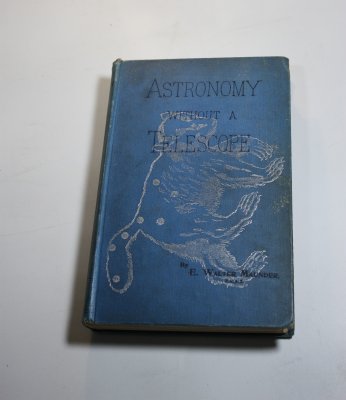
Explore the remarkable 1902 edition of Maunder's classic work—a foundational text that transformed naked-eye astronomy and introduced the world to the phenomenon now bearing his name. Discover why this early printing remains a prized possession for serious collectors.
A Pioneer's Vision: Understanding Maunder's Revolutionary Work
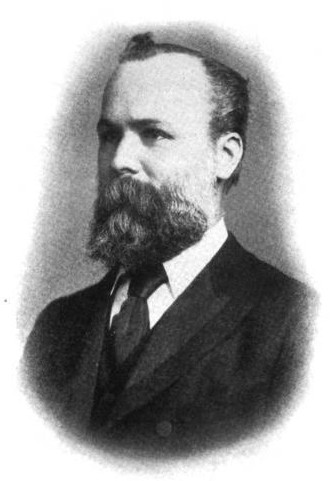
Edward Walter Maunder stands as one of the most influential astronomers of the late nineteenth and early twentieth centuries, and his 1902 volume Astronomy without a Telescope represents a watershed moment in how we approach and appreciate the night sky. Published at the height of his career, this remarkable work democratized astronomical observation by proving that profound discoveries and understanding could be achieved without expensive equipment—a radical notion for its era.
What makes this early printing particularly compelling is its timing. Maunder had already gained international recognition for his meticulous solar observations conducted at the Royal Observatory in Greenwich, where he served with distinction for decades. By 1902, his reputation was firmly established, and this volume served as both a culmination of his expertise and an invitation to readers of all backgrounds to join him in exploring the cosmos with their naked eyes.
The Maunder Minimum: A Legacy Written in the Stars
While Astronomy without a Telescope functions as a practical observational guide, Maunder's broader legacy profoundly shaped modern solar physics. His groundbreaking research into sunspots and solar magnetic cycles revealed a mysterious period in history—roughly 1645 to 1715—when sunspots virtually disappeared from the solar surface. This phenomenon became known as the Maunder Minimum, a term that directly honors his work and remains fundamental to our understanding of solar variability and its potential effects on Earth's climate.
The discovery of this pattern transformed how scientists understood stellar activity and long-term solar behavior. Today, the Maunder Minimum appears in virtually every serious discussion of solar physics and historical climatology, cementing Maunder's place among astronomy's greatest minds.
Why This 1902 Edition Commands Collector Attention
Early printings of Astronomy without a Telescope have become increasingly scarce, making this particular edition a genuine treasure for discerning collectors. What distinguishes this copy is its pristine presentation of Maunder's original vision, complete with the meticulously crafted constellation maps and detailed observational diagrams that made the work so accessible to Victorian-era readers.
These illustrations are not mere decorative flourishes—they are essential components of Maunder's pedagogical approach. The detailed star maps allow readers to locate constellations with confidence, while the explanatory diagrams demystify celestial mechanics. In an era before planetarium software and digital astronomy apps, these hand-rendered illustrations represented the cutting edge of astronomical education.
The rarity of early printings stems from several factors: the book's initial modest print run, the fragile nature of nineteenth-century paper stock, and the inevitable wear from frequent use by genuine stargazers who actually consulted these maps beneath the night sky. A well-preserved copy represents a direct connection to the golden age of amateur astronomy.
A Living Testament to Scientific Accessibility
For modern collectors, acquiring this edition offers more than historical prestige. It represents a philosophy—that scientific understanding should be accessible to all, regardless of wealth or institutional affiliation. In our current age of expensive telescopes and specialized equipment, Maunder's message feels surprisingly contemporary. This 1902 work remains a powerful reminder that the greatest discoveries often come from careful observation and genuine curiosity rather than advanced technology.
Works by this author in our catalogue