18 May 2026
Galileo's Trial: The Clash Between Science and Faith
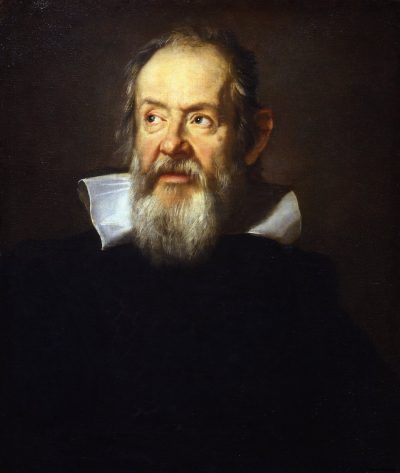
In 1633, Galileo Galilei faced the Roman Inquisition for his defense of heliocentrism in his groundbreaking work 'Dialogo sopra i due massimi sistemi del mondo.' Forced to abjure his scientific convictions and spend his final years under house arrest, Galileo's trial remains a pivotal moment in the history of science and religion.
The Publication of the Dialogo
In 1632, Galileo published his masterwork, 'Dialogo sopra i due massimi sistemi del mondo' (Dialogue Concerning the Two Chief World Systems), a defense of the Copernican heliocentric model against the traditional Ptolemaic geocentric view. Written in Italian rather than Latin, the book was designed to reach a broader audience and presented arguments comparing the two systems through a dialogue between three characters. Despite initial approval from Church censors, the work's popularity and persuasive arguments soon alarmed Vatican authorities.
The Inquisition Trial of 1633
On April 12, 1633, Galileo was summoned before the Roman Inquisition in Rome. At 68 years old and in declining health, the astronomer faced charges of heresy for promoting heliocentrism, which directly contradicted the Church's official position that Earth was the immobile center of the universe. The trial lasted several months, with Church officials arguing that supporting Copernicus's theory violated both Scripture and Church doctrine. Galileo's earlier 1616 warning from Cardinal Bellarmine—that he should neither hold nor defend heliocentrism—became central to the prosecution's case.
The Forced Abjuration
In June 1633, facing the threat of torture and execution for heresy, Galileo was forced to recant his scientific findings. On June 22, he knelt before the Inquisition and abjured his beliefs, famously declaring that he would "no longer hold, defend, or teach" the heliocentric theory. The Church sentenced him to indefinite imprisonment, though this was later commuted to house arrest. According to legend, as he rose from his knees, Galileo muttered 'Eppur si muove' ('And yet it moves'), suggesting his private conviction that the Earth indeed orbited the Sun remained unchanged.
House Arrest and Final Years
Following his trial, Galileo was confined to his home in Arcetri, near Florence, where he spent the last eight years of his life under Inquisition surveillance. Despite his imprisonment, Galileo continued his scientific work in secret. He dictated his final and perhaps greatest work, 'Discorsi e dimostrazioni matematiche, relazione a due nuove scienze' (Discourse on Two New Sciences), which laid groundwork for modern physics. This remarkable achievement—conducting cutting-edge research while under house arrest—testifies to Galileo's unwavering commitment to scientific inquiry. He was permitted occasional visitors, including his former student Vincenzio Viviani, and maintained correspondence with fellow scientists across Europe.
Legacy and Historical Significance
Galileo's death on January 8, 1642, marked the end of a life defined by his pursuit of truth through observation and mathematical reasoning. His trial became emblematic of the conflict between scientific progress and religious authority. For nearly 350 years, the Church maintained its condemnation of Galileo's work, though attitudes gradually shifted. In 1835, the Church quietly removed Galileo's books from the Index of Prohibited Books. Finally, in 1992, Pope John Paul II formally acknowledged the Church's error, describing the trial as a 'tragic mutual incomprehension.' Today, Galileo is remembered not as a heretic, but as the father of modern science—a man whose courage to question authority and trust empirical evidence changed the trajectory of human knowledge. For collectors of antiquarian astronomy books, Galileo's works represent more than historical artifacts; they are monuments to the indomitable human spirit in pursuit of truth.
Works by this author in our catalogue