20 June 2026
The First Printed Star Atlas: Piccolomini's Revolutionary 'De le Stelle Fisse' of 1548

Discover why Alessandro Piccolomini's 1548 edition of 'Dele Stelle Fisse' represents a watershed moment in astronomical history—the groundbreaking first printed star atlas that forever changed how we map the heavens.
A Renaissance Revolution in the Heavens
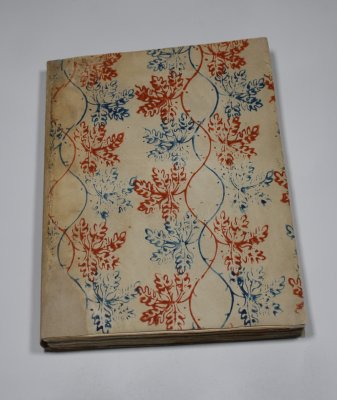
When Alessandro Piccolomini published his Dele Stelle Fisse in 1540, he initiated a transformation in astronomical literature that would resonate through centuries of scientific discovery. The 1548 second edition we present represents a remarkable achievement: the first true printed star atlas in human history. Before Piccolomini's innovation, astronomical texts relied on artistic constellation illustrations and textual descriptions. He fundamentally reimagined how astronomers could document and study the stars.
Understanding the Author and His Vision
Alessandro Piccolomini (1508-1578) was a Renaissance polymath—astronomer, mathematician, author, and ecclesiastic. A member of the prominent Sienese Piccolomini family, he possessed both the intellectual rigor and the resources necessary to pioneer new approaches to astronomical observation and documentation. His vision transcended mere artistic representation; he sought to create a systematic, reproducible method for identifying and locating celestial bodies.
Working within the Ptolemaic-Aristotelian geocentric framework that dominated Renaissance cosmology, Piccolomini crafted an exposition of classical astronomy that would have seemed authoritative to his contemporaries. Yet his true genius lay not in defending old theories, but in developing new tools to observe and record the heavens with unprecedented precision.
The Revolutionary Methodology
The appendix De le Stelle Fisse (On the Fixed Stars) stands as the cornerstone of this work's significance. Rather than depicting constellations through mythological illustrations, Piccolomini created actual maps of star positions—charts that showed where stars actually appeared in the sky. This seemingly simple innovation proved revolutionary. For the first time, astronomers could reference stars by their location on a printed chart, creating a standardized system that others could replicate and verify.
Perhaps most ingeniously, Piccolomini introduced a practice that would become fundamental to astronomical study: identifying stars by letter designation. This systematic labeling method anticipated by nearly a century the more extensive Bayer nomenclature (introduced by Johann Bayer in 1603), which expanded and refined Piccolomini's pioneering approach. Every modern astronomer using Greek letter designations owes an intellectual debt to this Renaissance innovator.
Why the 1548 Edition Matters to Collectors
The second edition of 1548 holds particular value for discerning collectors. Early printed star atlases remain exceptionally rare—fewer copies survive than many incunabula. The 1548 edition benefits from refinements made after the initial 1540 publication, representing a matured version of Piccolomini's groundbreaking work. Original copies command premium prices due to their historical importance, condition challenges from age, and their status as foundational documents in the history of scientific printing.
A Bridge Between Two Astronomical Eras
This volume represents a fascinating moment in scientific history—a bridge between ancient Ptolemaic astronomy and the observational methods that would eventually enable the Copernican revolution. Collectors who appreciate both the history of astronomy and the history of the book will find in this work an object of profound significance, embodying the Renaissance commitment to precision, systematization, and the printed dissemination of knowledge.
Works by this author in our catalogue