4 August 2026
A Window into 18th-Century Optics: Lacaille's Traité d'Optique from 1802
Discover the scientific legacy of Nicolas-Louis de Lacaille through this beautifully bound 1802 edition of Traité d'Optique, featuring twelve exquisite fold-out plates that illuminate the mysteries of light and vision.
The Master of Celestial Observation
Nicolas-Louis de Lacaille (1713-1762) stands as one of the most influential astronomers and mathematicians of the eighteenth century, yet his name remains relatively obscure outside scholarly circles. This Traité d'Optique, published in 1802—four decades after his death—represents a profound continuation of his scientific legacy, offering readers a comprehensive examination of optical principles that shaped modern astronomy and physics.
Understanding the Significance of This Edition
The 1802 edition of Lacaille's optical treatise is particularly significant for collectors and astronomy enthusiasts. Published during a period of renewed scientific interest in the revolutionary principles Lacaille had championed, this volume represents a bridge between Enlightenment-era natural philosophy and emerging nineteenth-century scientific methodology. Lacaille's work on optics was foundational to understanding how telescopes function—knowledge absolutely essential for astronomical observation and discovery.
What makes this edition especially valuable is the inclusion of twelve fold-out plates that meticulously illustrate optical phenomena, light refraction, lens configurations, and astronomical instruments. These engravings serve as visual arguments, demonstrating through elegant diagrams concepts that would otherwise remain abstract. For the collector, these surviving plates in their original state represent a remarkable artifact of scientific publishing craftsmanship.
The Physical Character of This Copy
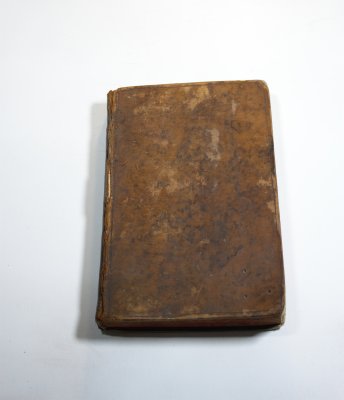
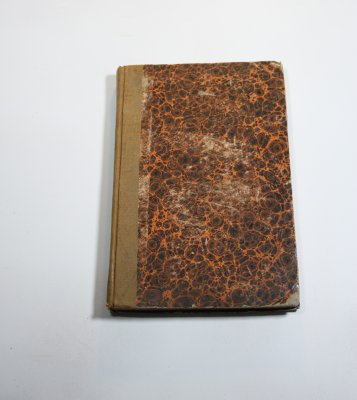
This particular copy arrives in half-leather binding, though notably the binding is not contemporary to the publication—a detail that tells its own story of scholarly use and care across generations. The binding demonstrates the value earlier collectors placed on preserving Lacaille's work, recognizing its enduring importance long after its initial publication.
The interior shows the natural patina of age that serious collectors appreciate: yellowish pages with scattered foxing and rust spots that vary throughout the volume. The fold-out plates display minor rust staining along their lower edges, yet remain remarkably legible and intact. Despite these signs of age and handling, the book maintains good overall condition, with only modest exterior wear.
Why This Book Matters Today
In an era when scientific knowledge was rapidly accumulating, Lacaille's systematic treatment of optics provided essential grounding for astronomers who depended upon telescopes as their primary instruments. His contributions to both practical and theoretical optics remained influential throughout the nineteenth century, making this 1802 edition a valuable snapshot of how his ideas were being transmitted to new generations of natural philosophers.
For collectors specializing in the history of astronomy, optics, or scientific publishing, this Traité d'Optique represents an authentic connection to one of history's most productive scientific minds. The combination of historical significance, beautiful illustrative plates, and honest aging makes this edition a worthy centerpiece for any collection celebrating humanity's ongoing quest to understand light, vision, and the cosmos itself.
Works by this author in our catalogue