16 July 2026
La Caille's Geometric and Physical Astronomy: A Landmark 1746 Edition That Shaped Celestial Science
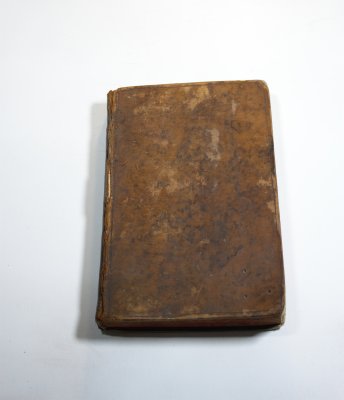
Discover why Nicolas-Louis de Lacaille's 1746 masterwork remains one of the most sought-after astronomy books by collectors. This rare first edition combines rigorous mathematical precision with groundbreaking observations from the southern hemisphere.
A Pioneer's Vision of the Cosmos
Nicolas-Louis de Lacaille stands as one of the most significant astronomers of the eighteenth century, and his Leçons d'astronomie geométrique et physique (Lessons in Geometric and Physical Astronomy) from 1746 represents a watershed moment in astronomical literature. Published during an era of intense scientific exploration and mathematical advancement, this work synthesized both theoretical astronomy and practical observation in ways that captivated scholars and influenced the discipline for generations to come.
What makes Lacaille extraordinary was not merely his ambition, but his mathematical precision—a hallmark that defined his entire career. At a time when astronomical measurements were often rough approximations, Lacaille brought the rigor of geometry and physics to bear on celestial phenomena, creating a framework that was both intellectually satisfying and practically useful for future astronomers.
Observations from the Southern Skies
Though this particular 1746 edition predates his most famous work in South Africa, it represents the foundational thinking that would soon revolutionize our understanding of the southern hemisphere's stars. Lacaille would later undertake an ambitious expedition to the Cape of Good Hope, where he would map the positions of nearly 10,000 stars, meticulously classifying them by brightness. This monumental achievement created the first comprehensive star catalog of the southern sky—work that had simply never been attempted before.
Beyond stellar cartography, Lacaille undertook the critical task of measuring the Meridian Arc at Cape Town, providing the first-ever precise measurement of Earth's north-south curvature in the southern hemisphere. While his initial findings suggested Earth had a pear-like shape rather than a perfect sphere—a conclusion later corrected by Thomas Maclear—the scientific rigor and methodology he employed established standards that would influence geodetic measurement for decades.
Why This First Edition Matters to Collectors
The 1746 first edition of Leçons d'astronomie geométrique et physique has become increasingly difficult to locate in the antiquarian market. Genuine copies are exceptionally rare, making this volume particularly valuable for serious collectors of scientific history and astronomy literature. The rarity stems partly from the book's age, but also from its immediate impact—many copies were heavily consulted and eventually worn beyond preservation.
For collectors, this edition represents a crucial snapshot of Lacaille's intellectual development before his more celebrated observational work. It demonstrates how his theoretical foundations in geometric and physical astronomy provided the framework for his later empirical breakthroughs. Owning this volume means possessing a piece of the intellectual scaffolding upon which modern astronomy was built.
A Treasure for the Discerning Collector
Whether you're a devoted astronomy enthusiast, a historian of science, or a rare book collector with an appetite for mathematical treatises, this 1746 edition deserves serious consideration. It represents the pinnacle of pre-Enlightenment astronomical thinking and the beginning of Lacaille's transformative career. In an age of digital astronomy, holding this tangible link to eighteenth-century discovery offers a profound connection to our astronomical heritage.
Works by this author in our catalogue