14 July 2026
Pietro Angelo Secchi's Groundbreaking 'Le Stelle': A Pioneering Work in Stellar Classification
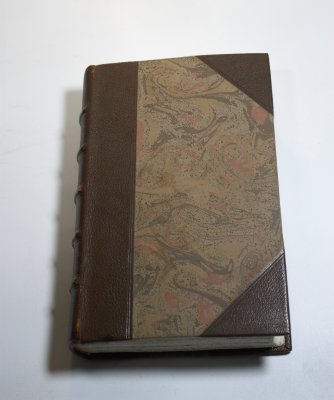
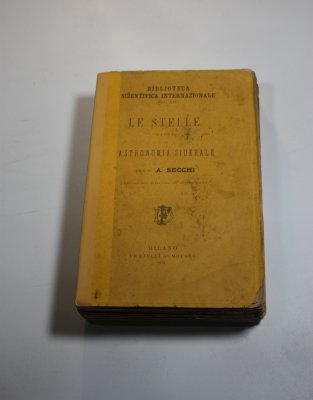
Discover the rare first edition of 'Le Stelle' by Father Pietro Angelo Secchi, a revolutionary text that established the foundation of modern stellar spectroscopy. This 1877 publication represents a crucial moment when astronomy transformed from observational science to analytical spectroscopy.
The Jesuit Pioneer Who Changed Astronomy Forever
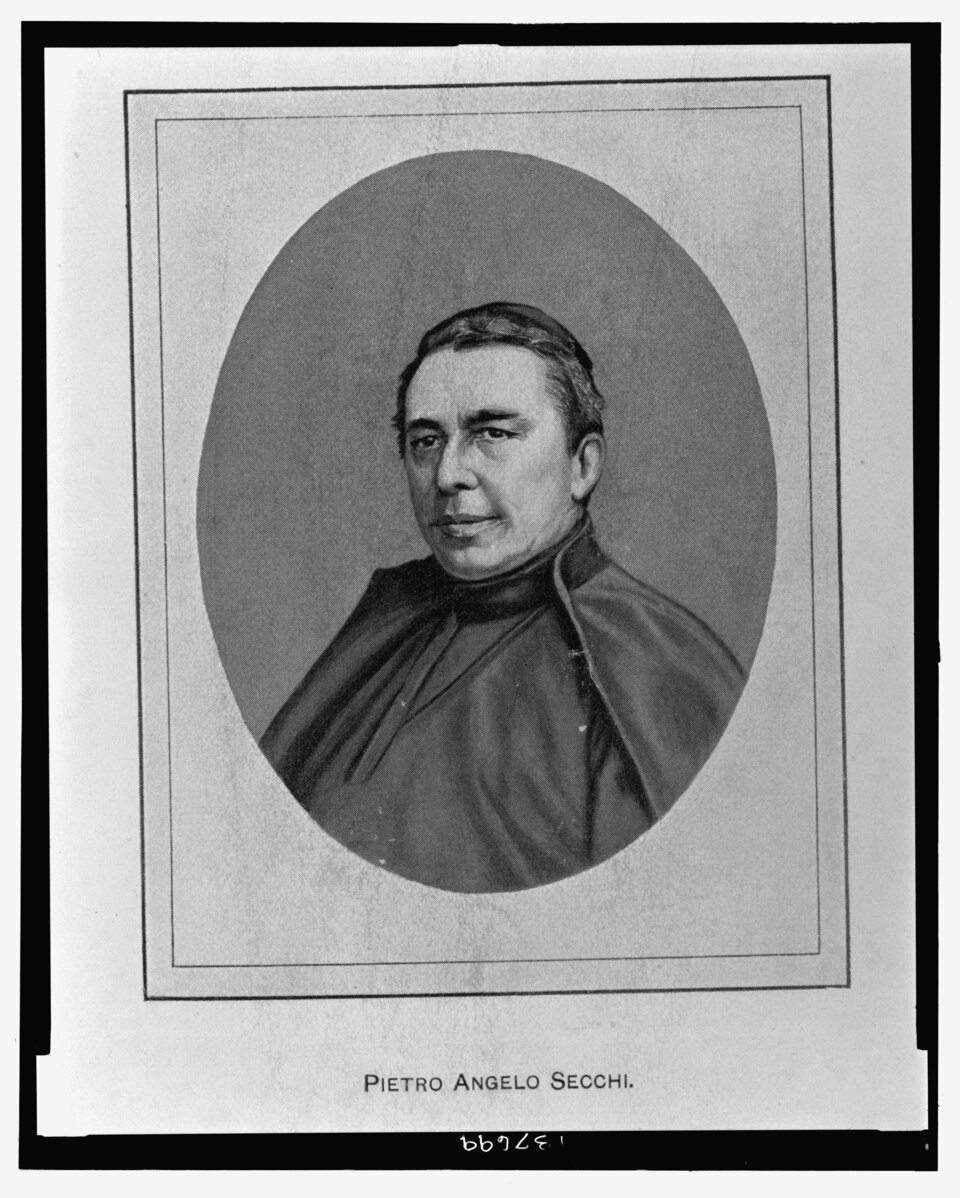
In the annals of astronomical history, few figures command as much respect and admiration as Father Pietro Angelo Secchi, the Italian Jesuit priest whose revolutionary work in stellar spectroscopy fundamentally transformed our understanding of the cosmos. Yet despite his extraordinary contributions to science, Secchi remains more celebrated in international scientific circles than in his native Italy—a testament to both the universal importance of his work and the complex political circumstances that surrounded his career.
Revolutionary Spectroscopy and Stellar Classification
The first edition of Le Stelle ("The Stars"), published in 1877, represents a watershed moment in astronomical science. During the period from 1866 to 1868, Father Secchi employed the emerging technique of spectroscopy to classify stars into four distinct classes based on their spectral emissions. This groundbreaking classification system was revolutionary—instead of merely observing the positions and brightnesses of stars, Secchi analyzed the light they emitted, decomposing it into its constituent components to reveal the physical characteristics of these distant suns.
What made Secchi's approach particularly innovative was his understanding that spectral analysis could unlock the secrets of stellar composition, temperature, and nature. By examining both direct light from stars and reflected light from celestial bodies, he created a framework that would influence stellar classification for generations to come. In this very edition of Le Stelle, Secchi presented his refined classification system, which by 1877 had expanded to include a fifth stellar class, representing the culmination of over a decade of meticulous observation and analysis.
The Man Behind the Science
From 1850 until 1878, Father Secchi served as director of the Osservatorio Astronomico del Collegio Romano (the Astronomical Observatory of the Roman College), where he conducted his most important research. This position allowed him to pursue his scientific passion while maintaining his religious vocation. However, the Italian unification and the subsequent rise of anticlericalism in the newly unified nation created significant challenges. To Secchi's considerable disappointment, the Italian state seized control of the observatory in 1873, fundamentally altering his ability to conduct independent research.
Why This Edition Matters to Collectors
This rare first edition of 1877 holds immense value for both astronomy enthusiasts and rare book collectors. It represents a critical junction in the history of science—the moment when spectroscopy transitioned from an experimental novelty to an indispensable astronomical tool. The edition captures Secchi's complete five-class stellar classification system, making it essential for understanding the development of modern stellar physics.
Collectors prize this volume not merely as a historical artifact, but as a tangible connection to the birth of astrophysics itself. In our digital age, holding a first edition of Le Stelle connects us directly to Secchi's intellectual journey and the moment when humanity truly began to understand the physical nature of the stars.
Works by this author in our catalogue