24 August 2026
A Window to the Moon: The Historic Ranger VII Photographs That Changed Lunar Exploration

Discover why NASA's Ranger VII Photographs of the Moon, Part II represents a pivotal moment in space exploration history. This rare 1965 publication captured humanity's first detailed views of the lunar surface and remains an essential collector's item for astronomy enthusiasts.
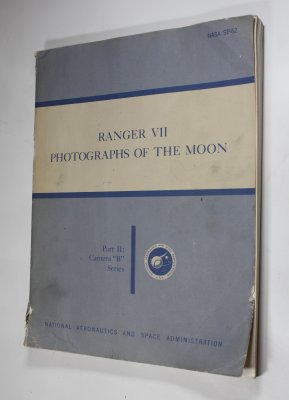
The Ranger VII Photographs of the Moon. Part II: Camera "B" stands as one of the most significant scientific documents in the history of space exploration. Published by NASA in 1965, this remarkable volume represents not merely a collection of images, but rather a testament to human ingenuity and the dawn of the Space Age's most ambitious achievements.
The Mission That Changed Everything
On July 28, 1964, NASA launched Ranger 7, a spacecraft that would accomplish what had eluded the agency's previous attempts. Unlike its six predecessors, which had all ended in failure, Ranger 7 achieved complete mission success. The probe was specifically designed to impact the lunar surface while transmitting high-resolution photographs back to Earth during the final minutes of descent. This wasn't merely another space mission—it was the first time humanity would see the Moon in extraordinary detail from up close.
What makes this particular publication extraordinary is its presentation of images from Camera "B," one of two cameras aboard the spacecraft. As the probe descended toward the lunar surface at tremendous speed, both cameras captured images of unprecedented clarity, revealing the Moon's terrain in ways that forever altered our understanding of Earth's nearest neighbor. The 200 photographs contained within this 17-page volume provide a visual record of the Moon's topology, crater formations, and surface composition that scientists had only theorized about before.
Why This Document Remains Invaluable
For collectors and astronomy enthusiasts, the Ranger VII Photographs represents far more than a historical curiosity. This publication represents the moment when lunar exploration transitioned from speculation to observation. Each photograph was meticulously printed and authenticated by NASA, making this an official scientific document of the highest caliber. The technical quality of these images—despite being captured from a rapidly descending spacecraft in 1964—remains impressive even by modern standards.
The rarity of this edition stems from several factors. First, these were technical publications with limited print runs intended for scientific institutions, observatories, and government agencies. Second, as working documents, many copies were heavily used, annotated, or damaged over decades. Original copies in good condition have become increasingly scarce, making them highly sought after by serious collectors of space exploration memorabilia and vintage scientific documents.
A Collector's Treasure
Owning this volume connects you directly to a pivotal moment in human history. The Ranger VII mission marked the beginning of successful lunar exploration, paving the way for the Surveyor probes and ultimately the Apollo moon landings. This Part II volume, with its focus on Camera "B" imagery, provides unique perspectives that complement other Ranger VII publications.
Beyond its scientific value, this 1965 NASA publication exemplifies the optimism and achievement of the Space Age. The photographs within these pages inspired generations of astronomers, engineers, and space enthusiasts. For collectors seeking authentic pieces of space history, an original copy of Ranger VII Photographs of the Moon. Part II represents both an investment and an irreplaceable connection to humanity's greatest explorations.
Works by this author in our catalogue