28 May 2026
Capturing the Sun's Surface: Jules Janssen's Revolutionary 1879 Solar Photography

Discover how Jules Janssen's groundbreaking photographic work in the Annuaire pour l'an 1879 revolutionized solar astronomy. This rare volume contains original photoglyphic prints of the sun's granulation—among the first convincing photographic images of solar surface detail ever made.
A Milestone in Astronomical Photography
The Annuaire pour l'an 1879 (Yearbook for the Year 1879), published by the prestigious Parisian house Gauthier-Villars, represents far more than a routine astronomical reference work. Within its original pink paper covers lies a scientific watershed moment: Jules Janssen's landmark article "Aviso sobre los progresos recientes en física solar" (Notice on Recent Advances in Solar Physics), which occupies pages 623-685 and forever changed how humanity could observe the sun.
What makes this edition extraordinary are the two original photoglyphic prints mounted within its pages. These remarkable images, captured on June 1st, 1878, at 6:47 and 7:37 in the morning, represent the solar surface with unprecedented clarity and detail. For the first time in the history of solar photography, these plates convincingly reveal the fine granulation that covers the entire solar photosphere—a discovery that would fundamentally reshape our understanding of solar structure and activity.
Jules Janssen: Pioneer of Solar Photography
Jules Janssen (1824-1907) was not merely an observer but a visionary who recognized photography's revolutionary potential for astronomy. Beginning in 1877 at his observatory in Meudon, Janssen embarked on a systematic campaign to photograph the sun using a specially constructed photographic telescope designed by the renowned optician Adam Prazmowski. This instrument proved to be the key that unlocked the sun's secrets.
Prior attempts at solar photography existed, certainly. Fizeau and Foucault had experimented with daguerreotype methods as early as 1845, while Reade, Porro, and De La Rue had pursued photographic techniques throughout the 1850s and 1860s. Yet all these efforts, however commendable, captured only fragmentary details. Janssen's achievement transcended these predecessors: his photographs demonstrated that the entire solar surface possessed a granular structure, with distinct regions of relative calm alternating with zones of intense activity. This was revelatory.
The Significance of These Plates
The photoglyphic prints in this 1879 yearbook hold special significance for collectors and historians alike. These are not reproductions or engravings, but original plastified photoglyphic impressions—a reproduction technique that preserved photographic integrity while creating durable prints. Their presence transforms the volume from a mere reference work into a primary scientific document of the highest importance.
Janssen's photographs enabled scientists to track solar phenomena across consecutive days, revealing the dynamic processes governing the sun's behavior. More profoundly, they demonstrated that photography could serve as an independent scientific instrument, capable of discoveries that visual observation alone could never achieve. This marked the first major scientific discovery resulting exclusively from photographic intervention.
A Collector's Treasure
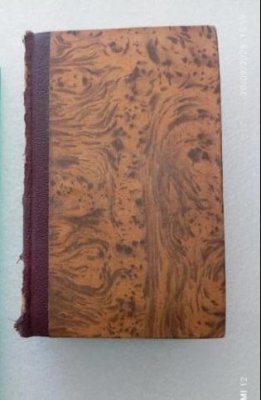
For the rare book collector and astronomy enthusiast, this 1879 Annuaire remains exceptionally difficult to locate in fine condition with its original pink covers and both photoglyphic plates intact. Its rarity, combined with its pivotal historical importance and the technical beauty of its original mounted prints, makes it one of the most coveted volumes in the history of astronomical literature. Owning this work is owning a tangible piece of scientific revolution.
Works by this author in our catalogue