5 August 2026
Lunar Mysteries Unveiled: Philipp Fauth's 'Was wir Monde wissen' and Early 20th-Century Moon Science
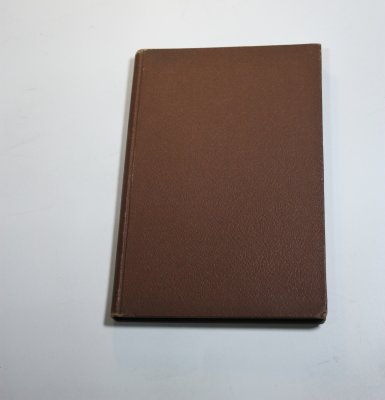
Discover Philipp Fauth's groundbreaking 1906 work on lunar geography. This rare German text represents a pivotal moment when telescopic observation transformed our understanding of Earth's moon.
The Moon Through Fauth's Eyes
Philipp Fauth's Was wir Monde wissen (What We Know About Moons), published in 1906, stands as a fascinating testament to the state of astronomical knowledge at the turn of the twentieth century. This German-language work emerged during a transformative period when improved telescopic technology was dramatically reshaping our understanding of lunar geography and the broader solar system.
Fauth was a respected amateur astronomer and a prolific scientific author whose work bridged the gap between rigorous observation and accessible popular science. His approach to describing lunar features was remarkably systematic for its era, combining detailed observational data with engaging narrative prose that captured the imagination of educated readers throughout German-speaking Europe.
A Revolutionary Moment in Lunar Science
The early 1900s represented a crucial turning point in astronomy. Photography was beginning to supplement visual observation, and debates raged in scientific circles about the moon's geological history. Was the lunar surface shaped primarily by volcanic activity or by meteoritic bombardment? Fauth's work directly engaged with these contemporary controversies, presenting the latest theories alongside his own careful observations.
The title itself reveals Fauth's ambition—rather than focusing solely on Earth's moon, he positioned his work within the broader context of planetary moons. This comparative approach was relatively novel for general scientific literature of the period, reflecting emerging professional astronomy's expanding scope and sophistication.
Why Collectors Seek This Edition
The 1906 first edition of Was wir Monde wissen remains scarce in today's antiquarian market. Several factors contribute to its rarity and desirability among serious collectors. First, German scientific works from this period were often published in limited runs, never achieving the distribution of English or French publications. Second, this particular work represents the frontier of popular science communication—accessible enough for educated amateurs yet substantive enough to interest professionals.
Book condition is another critical factor. Scientific texts from this era frequently suffered heavy use in observatories and study circles, making well-preserved copies increasingly difficult to locate. The technical illustrations and detailed lunar maps that make this book valuable for study also made it expensive to produce, limiting original print runs.
A Window Into Historical Astronomy
For collectors and astronomy enthusiasts, Was wir Monde wissen offers invaluable insights into pre-space-age lunar science. Fauth's meticulous descriptions of surface features—many of which he named himself—and his attempts to catalog and classify what he observed provide a remarkable snapshot of observational astronomy's capabilities and limitations before the Space Age revolutionized our knowledge.
This book deserves a place in any serious astronomy collection, both as a valuable historical document and as a reminder of how dedicated observers like Fauth pushed the boundaries of human knowledge using nothing more than telescopes, patient observation, and careful reasoning.
Works by this author in our catalogue