27 June 2026
A Masterpiece of Early Scientific Popularization: Fontenelle's Rare 1686 'Entretiens sur la pluralité des mondes'
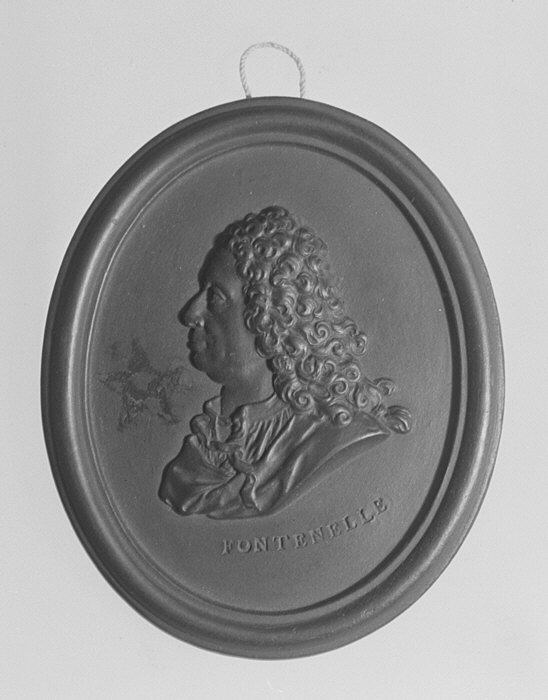
Discover why this first edition of Fontenelle's groundbreaking astronomy dialogue remains one of the most sought-after scientific texts of the 17th century, complete with its spectacular engraved cosmological plate.
The Birth of Scientific Enlightenment
Bernard le Bovier de Fontenelle's Entretiens sur la pluralité des mondes (Conversations on the Plurality of Worlds) represents a pivotal moment in the history of science communication. Published in 1686 by the widow C. Blageart in Paris, this remarkable work emerged during a transformative period when scientific ideas were beginning to escape the confines of academic circles and enter the realm of popular discourse. Fontenelle's elegant dialogues succeeded where others had failed: making complex Copernican and Cartesian astronomy accessible to the educated aristocracy, particularly women—a revolutionary approach for its time.
A Legacy of Elegant Instruction
What makes this 1686 first edition particularly significant is its structure and presentation. The work comprises five evening conversations, delivered to a fictitious Marquise, where Fontenelle gradually unveils the radical notion that multiple worlds might exist beyond our own. Rather than employing dense mathematical proofs or theological arguments, he employed wit, charm, and clear reasoning to demonstrate how the Earth moves around the Sun and how other celestial bodies might harbor life. This approach was genuinely innovative and helped establish the template for scientific popularization that persists today.
The original manuscript stands as 359 pages of meticulously printed text, culminating in a spectacular hand-engraved cosmological plate by the accomplished Spanish artist Juan Dolivar (1641-1692). This folding illustration, executed in calcographic technique, serves as the visual apotheosis of Fontenelle's arguments—a remarkable diagram that would have captivated readers with its intricate representation of planetary mechanics and celestial harmony.
Why This Edition Remains Extraordinarily Rare
For collectors and historians alike, this particular copy represents a holy grail of early modern scientific publishing. The 1686 first edition has become practically impossible to locate in the antiquarian market. Most copies that survived the centuries have succumbed to the ravages of time, insect damage, and careless handling. This specimen, bound in contemporary dark calfskin with six gilt-tooled bands and period florals adorning its spine, represents an exceptional survivor.
The volume bears the honorable scars of more than three centuries: worn edges, bumped corners, minor wormholes, and subtle dampness stains are badges of authenticity rather than defects. More tellingly, the pagination errors characteristic of this original edition—page 301 numbered as 303, page 339 as 349—serve as definitive proof of provenance.
A Bridge Between Worlds
For the serious collector, this book represents far more than a text on astronomy; it embodies the intellectual ferment of the Scientific Revolution. Fontenelle's work bridged the gap between Descartes's mechanical philosophy and Newton's emerging physics, presenting to European society ideas that would reshape humanity's understanding of its place in the cosmos. The fact that this first edition survives with its original binding, complete cosmological plate, and interior largely intact makes it an invaluable artifact—a tangible connection to the very moment when science became enlightened conversation.
Works by this author in our catalogue