7 August 2026
Edwin Hubble's Groundbreaking 1926 Classification: The Paper That Reshaped Our Universe
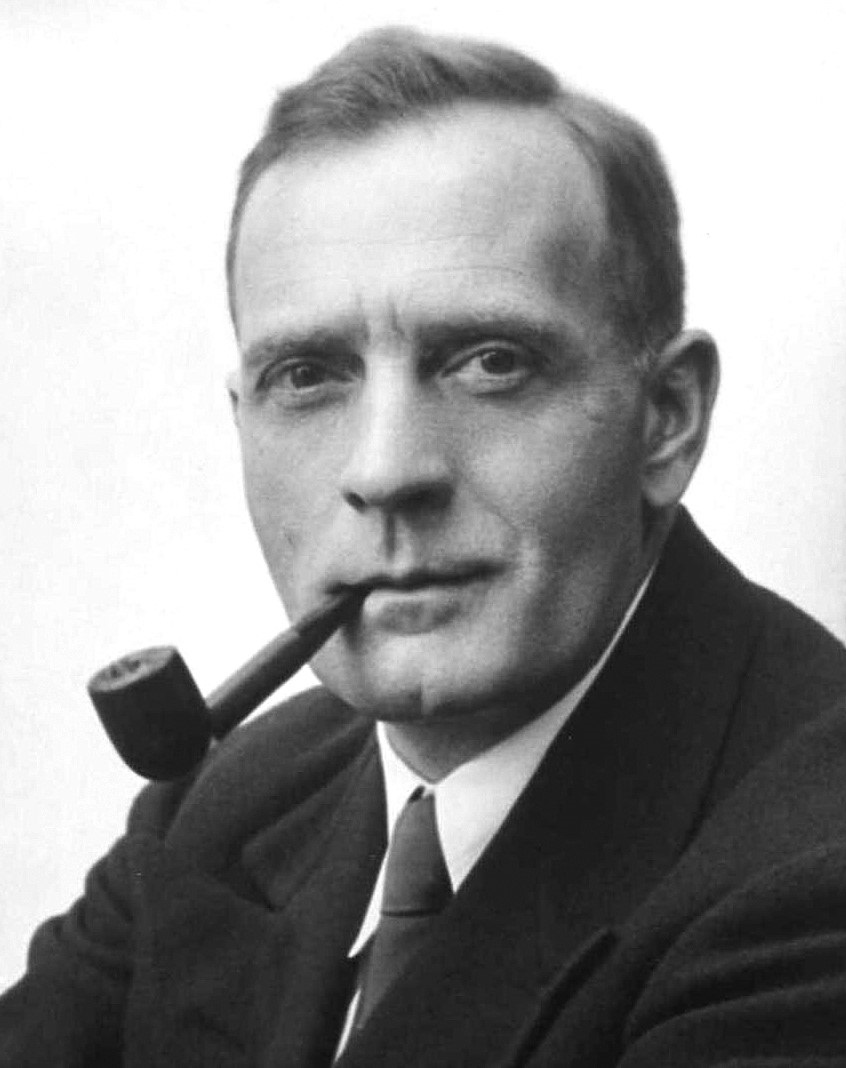
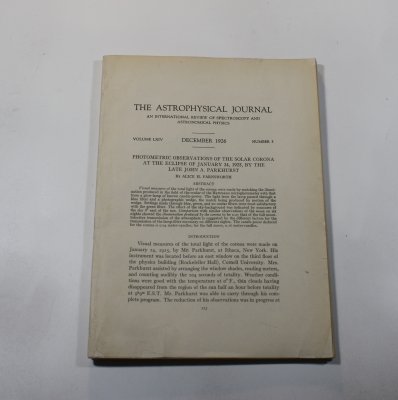
Discover why Edwin Hubble's 1926 'Extra-galactic Nebulae' remains a cornerstone of modern astronomy. This first edition presents Hubble's revolutionary galaxy classification system and his audacious application of Einstein's relativity to the cosmos itself.
A Landmark Moment in Astronomical History
In 1926, Edwin Hubble published a paper that fundamentally transformed our understanding of the universe. Extra-galactic Nebulae represents far more than a simple cataloguing effort—it stands as a watershed moment in twentieth-century astronomy, combining observational precision with theoretical audacity. This first edition captures the exact moment when humanity began to truly comprehend the vast, dynamic cosmos beyond our own galaxy.
Hubble's paper accomplishes something remarkable: it presents the first comprehensive morphological classification of galaxies while simultaneously measuring their mean density and deriving the average mass density of galaxies throughout the universe. Yet the significance extends even further. For the first time, Hubble applied relativistic cosmology—Einstein's revolutionary theories—directly to the universe of galaxies as a whole, bridging observational astronomy and theoretical physics in ways that profoundly influenced subsequent cosmological thinking.
The Content That Changed Everything
Within these pages, enriched with three detailed plates and numerous data tables, Hubble presents his elegant galaxy classification system—still recognizable today in what astronomers call the "Hubble sequence." But his ambitions extended beyond mere classification. By determining the mean density of nebulae in space, Hubble performed a calculation of breathtaking audacity: he applied this observational data to general relativity theory to estimate the radius of curvature of a finite universe.
His result—approximately 600 times the distance to observable nebulae detectable with contemporary telescopes—represented what the Carnegie Institution notes as "the boldest proof of the universe" and stimulated an extraordinary surge in theoretical cosmological work. But Hubble wasn't finished. With characteristic foresight, he wrote prophetically that "with reasonable increases in the range of our instruments and the size of our telescopes, it may become possible to observe an appreciable fraction of the Einstein universe." History would prove him absolutely right.
The Prelude to Hubble's Law
Perhaps most intriguingly, this 1926 paper contains the seeds of Hubble's most famous discovery. While developing his galaxy classification system, Hubble noticed something extraordinary: virtually every galaxy he observed appeared to be moving away from Earth. Building on earlier spectroscopic work by Vesto Slipher, Hubble possessed the crucial insight that would crystallize just three years later into Hubble's Law—the revolutionary principle that galaxies recede from us at velocities proportional to their distance, proving the universe itself is expanding.
For collectors and astronomy enthusiasts, this 1926 first edition represents a rare window into a pivotal moment of scientific discovery. It captures Hubble's thinking before the full implications of his own data became apparent, making it an essential primary source document. This is the paper that literally expanded our universe from one galaxy to billions, establishing the framework for modern cosmology and demonstrating the profound relationship between meticulous observation and grand theoretical insight.
Works by this author in our catalogue