23 July 2026
A Visionary's Legacy: Huygens' Posthumous Masterpiece on Cosmic Plurality
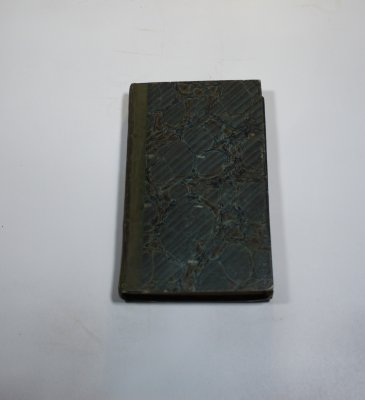
The 1718 French edition of Christiaan Huygens' groundbreaking Nouveau traité de la Pluralité des Mondes represents a crucial moment in astronomical philosophy. This rare translation captures the great Dutch scientist's revolutionary speculation about Saturn's rings and the possibility of extraterrestrial life.
Christiaan Huygens and the Question of Other Worlds
Few figures in the history of science bridged the gap between rigorous empirical observation and imaginative philosophical speculation quite like Christiaan Huygens (1629-1695). The Dutch mathematician, physicist, and astronomer left an indelible mark on human understanding of the cosmos—from his revolutionary improvements to the telescope to his discoveries that fundamentally changed how we view our place in the universe. Yet it was perhaps in his most speculative work that Huygens posed questions that would captivate readers for centuries: Could other worlds harbor life? What might those inhabitants be like?
The Nouveau traité de la Pluralité des Mondes (New Treatise on the Plurality of Worlds), published posthumously in 1718, represents the French translation of Huygens' Latin work Cosmotheoros. This edition—a second French translation following the original 1702 release—is a treasured artifact for collectors and astronomy enthusiasts alike, offering intimate access to the mind of one of history's greatest scientific thinkers as he contemplated the deepest mysteries of creation.
The Discovery That Changed Everything
To understand the significance of this work, one must first appreciate Huygens' most famous astronomical achievement: the discovery of Saturn's rings in 1654. Using telescopes he designed himself, Huygens observed what he initially described as a mysterious appendage to Saturn—what earlier astronomers had struggled to comprehend. His correct identification of this phenomenon as a ring system was revolutionary, and it sparked profound philosophical questions about the nature of celestial bodies.
In Cosmotheoros, Huygens drew upon this discovery as a springboard for broader speculation. If Saturn possessed such extraordinary features, might it not also harbor planetary bodies capable of supporting life? This seemingly simple question led him to develop an elaborate philosophical framework for considering the habitability of other worlds—arguments that were both scientifically reasoned and refreshingly imaginative.
Why This 1718 Edition Matters
The 1718 French translation is particularly valuable to collectors for several reasons. First, it represents the work in the language that would have made Huygens' ideas accessible to the broadest educated audience of his era. Second, this specific edition predates the 1724 reissue titled De la diversité des mondes, making it a critical link in the transmission of Huygens' thought during the early Enlightenment.
The book's rarity stems from its age, the limited print runs of 18th-century scientific works, and the fact that many copies were simply lost to time and deterioration. A well-preserved example represents not merely a printed text, but a window into the intellectual world of an era when speculation about cosmic life was beginning to bridge science and philosophy.
Collectors and enthusiasts recognize this volume as essential to understanding the history of exobiology and cosmic philosophy. It stands as a testament to Huygens' visionary thinking—a mind unafraid to ask fundamental questions about our universe, even when definitive answers seemed impossibly distant.
Works by this author in our catalogue