25 June 2026
Descartes' Revolutionary Method: Why the 1688 Girard Edition Matters to Collectors
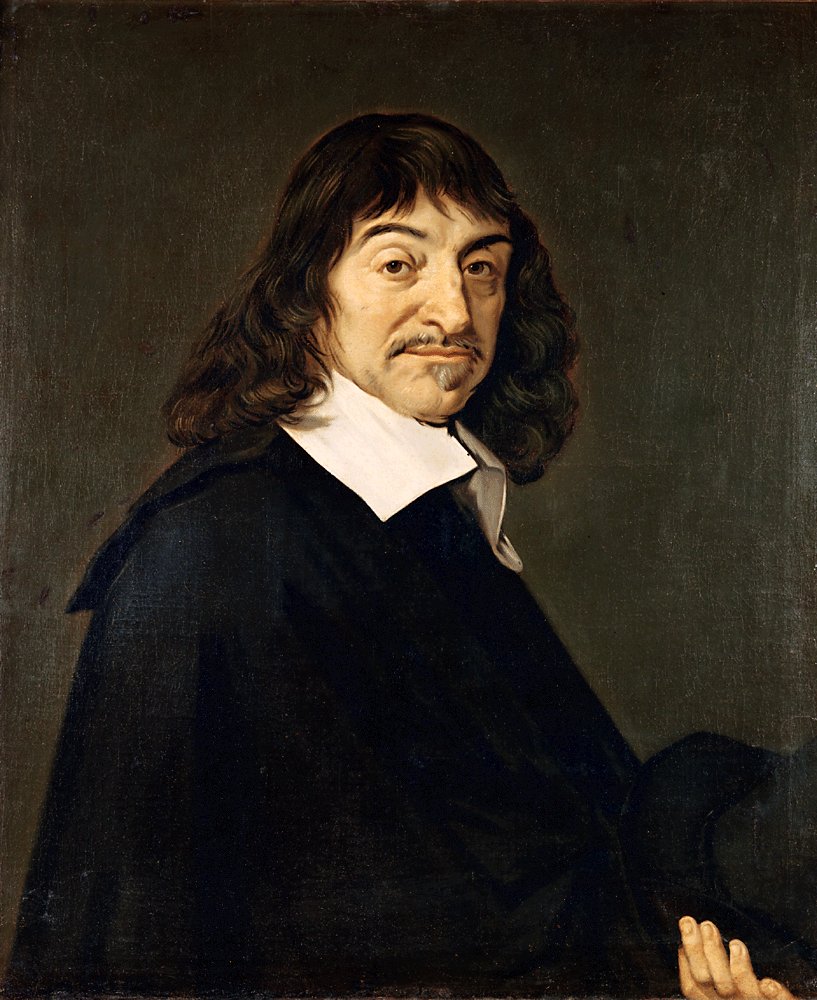
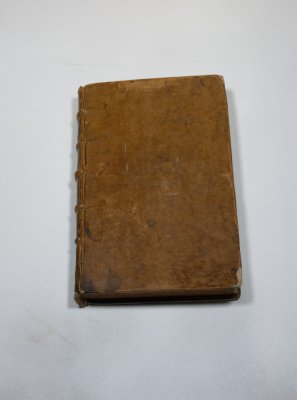
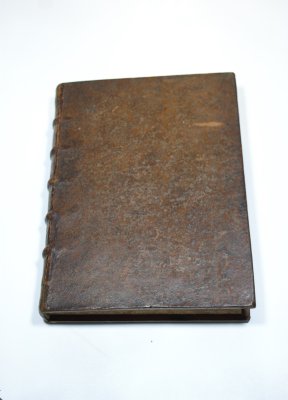
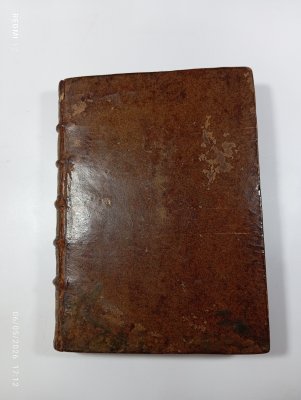
Discover why the 1688 Theodore Girard edition of Discours de la Méthode remains a cornerstone of scientific history. This rare publication showcases Descartes' groundbreaking philosophical approach with stunning full-page woodcuts and practical applications to astronomy and natural philosophy.
A Philosophical Revolution Hidden in Plain Sight
When René Descartes first published his Discourse on Method in 1637, he did so anonymously—a curious choice for a work that would fundamentally reshape Western thought. By the time the Theodore Girard edition appeared in 1688, over fifty years later, Descartes' revolutionary ideas had already transformed him into one of history's most influential philosophers and modern scientists. This particular edition represents a crucial moment in the dissemination of Enlightenment thinking across Europe.
What makes Descartes' method so revolutionary? Rather than relying solely on ancient authorities or pure theological reasoning, he proposed that knowledge must be grounded in the experience of the mind itself. His famous cogito, ergo sum—"I think, therefore I am"—became the cornerstone of modern philosophy. For collectors of rare scientific and philosophical texts, this work stands as the birth certificate of modern rational inquiry.
The Method That Changed Science
Descartes' analytical approach was elegant in its simplicity: reduce complex problems into smaller, more manageable questions, solve those systematically, and then reconstruct the answers into a coherent whole. This methodology proved transformative not just for philosophy but for practical science. The accompanying essays on optics and meteorology weren't mere supplements—they were proof of concept, demonstrating how Descartes' rules of scientific investigation could yield tangible results about the natural world.
For astronomy enthusiasts, the optical studies are particularly fascinating. Descartes' work on refraction and light laid important groundwork for later developments in telescopy and our understanding of celestial observation. His meteorological treatises similarly showcase an attempt to explain atmospheric phenomena through mechanical principles rather than mystical causes.
Why This 1688 Edition Deserves Your Attention
The Theodore Girard edition is distinguished by its exceptional presentation, featuring seven full-page woodcuts alongside text-integrated diagrams and illustrations. In an era when scientific publishing was still finding its visual language, these woodcuts served both pedagogical and aesthetic purposes. They made complex ideas accessible to educated readers while adding significant production value to the volume.
This particular edition is increasingly sought by serious collectors for several reasons. First, it represents a critical moment in French intellectual history—published during the reign of Louis XIV, when French culture and science dominated European thought. Second, the combination of philosophical content with practical scientific illustrations creates a bridge between abstract reasoning and empirical observation. Third, finding well-preserved copies with all original woodcuts intact has become progressively rare, as these delicate prints have suffered through centuries of handling and storage.
A Window Into the Scientific Revolution
Owning a copy of the 1688 Girard Discours de la Méthode means possessing more than a book—you hold a pivotal text in humanity's intellectual development. It represents the moment when modern science began to distinguish itself from scholasticism, when the mind became the primary tool for understanding nature, and when methodology itself became as important as any individual discovery.
For the collector passionate about astronomy, philosophy, and the history of science, this edition offers authentic connection to the very foundations of modern thought.
Works by this author in our catalogue